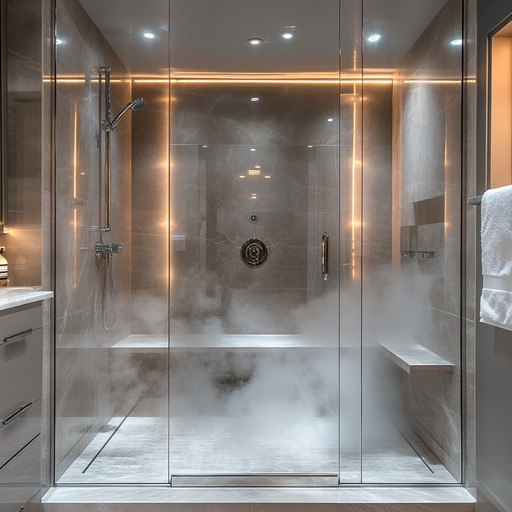
A steam shower needs more than an attractive enclosure. The door has to help contain heat and moisture while still providing comfortable access and working reliably in a humid environment.
That makes a steam shower door different from an ordinary shower door. Small gaps that are acceptable in a conventional shower can allow steam to escape quickly, reducing the effectiveness of the enclosure.
The door, glass, seals, ceiling, walls, ventilation, and steam generator should therefore be considered as one system.
What Makes a Steam Shower Door Different?
A conventional shower enclosure is mainly designed to control splashing water.
A steam shower needs to retain hot vapour inside the enclosed space for as long as practical.
A suitable door typically has a close-fitting seal arrangement and is installed as part of an enclosure that limits unnecessary gaps.
The exact design depends on the steam shower configuration, but the objective is straightforward: keep steam inside while allowing the user to enter and exit comfortably.
Frameless Doors Can Still Work
Frameless glass is popular for its clean appearance, and it can be used in some steam shower designs.
However, a frameless system needs careful detailing because there is less framing around the glass.
The hinges, seals, glass-to-wall connections, and gaps around the door all need to be appropriate for steam containment.
A frameless steam shower door should therefore be selected as a complete system rather than treating it as an ordinary frameless shower door.
Framed Doors Offer More Sealing Options
A framed or semi-framed enclosure can provide additional surfaces for seals and weatherstripping.
This can make it easier to control the movement of steam around the door.
The frame material should be suitable for prolonged exposure to moisture and heat, and the seals should be designed for the intended application.
Framing does not automatically make an enclosure steam-tight, though. Installation and the rest of the enclosure construction remain equally important.
Glass Thickness and Safety
Steam shower doors commonly use safety glazing appropriate for shower applications.
The correct glass thickness depends on the door dimensions, hardware, and enclosure design.
Clear glass is frequently selected because it keeps the shower visually open. Tinted, patterned, or textured glass can provide a different appearance or additional privacy.
The glass should be specified according to applicable safety requirements rather than chosen purely for aesthetics.
Seals Are Critical
A conventional shower door can tolerate some minor gaps without significantly affecting its purpose.
A steam shower cannot.
Door seals help minimise the escape of steam around the edges of the panel. Over time, seals can become brittle, loose, or damaged.
They should be inspected periodically and replaced when necessary.
The seal design should also allow the door to operate normally without excessive resistance.
The Door Should Close Properly
A steam shower door needs to close consistently.
A door that sags or fails to align with the frame can create gaps and make the enclosure less effective.
Heavy glass places significant loads on hinges and mounting points. Proper installation is therefore essential.
If the door begins rubbing against the frame, floor, or wall, it should be inspected rather than repeatedly forced into position.
Think About the Ceiling Too
A steam shower is not made effective by the door alone.
Steam rises, so the enclosure needs an appropriate ceiling and wall construction to contain moisture.
The ceiling is commonly designed with a slope to help manage condensation and prevent water droplets from falling directly onto occupants.
The walls and ceiling also require suitable waterproofing and materials capable of handling the humid environment.
Ventilation Needs Careful Planning
Steam needs to remain inside the enclosure while the steam shower is operating, but the bathroom still needs appropriate ventilation.
The ventilation system should be planned so that moisture can be removed from the wider bathroom after use.
A fan positioned or operated incorrectly can pull steam out of the enclosure too quickly.
The steam shower and bathroom ventilation should therefore be designed together rather than installing an extractor without considering the steam system.
Door Swing Affects Safety
The door should provide convenient access and should not create an obstruction in the bathroom.
An outward-opening door can provide easier access to someone inside the shower, but it requires enough clearance outside the enclosure.
The door must also be positioned so it does not collide with a toilet, vanity, wall, or another door.
The final configuration should comply with applicable safety requirements.
Hardware Needs to Handle Humidity
Handles, hinges, brackets, and other components are repeatedly exposed to warm moisture.
The hardware should therefore be suitable for the environment and compatible with the selected glass.
Stainless steel and other corrosion-resistant finishes are commonly considered for wet areas.
Hardware quality matters particularly on large glass doors because hinges carry substantial weight.
Custom Sizes Can Improve Steam Containment
Steam showers are often built into specific areas rather than standard shower openings.
An unusual ceiling height, corner arrangement, bench, or wall shape may require custom glass.
A custom steam shower door can be manufactured to suit the exact opening and enclosure design.
This can make it easier to control gaps and coordinate the door with fixed glass panels.
Don’t Forget the Threshold
The bottom of the door also needs attention.
A threshold or appropriate seal can help control water while maintaining a practical entry point.
The detail should work with the shower floor and drainage system.
The threshold should not create an unnecessary trip hazard, particularly where accessibility is a concern.
See also: Effective Online Payment Solutions for Modern Businesses
Cleaning and Maintenance
Steam showers expose glass and hardware to both moisture and condensation.
Mineral deposits can accumulate on glass, while seals can deteriorate over time.
Regular cleaning can help preserve visibility and reduce buildup.
The door should also be inspected for:
- Loose hinges
- Damaged seals
- Cracked or chipped glass
- Corrosion
- Misalignment
- Loose handles
- Water leakage
Small maintenance issues are easier to address before they affect the entire enclosure.
Installation Should Follow the Complete Steam Shower Design
A steam shower door cannot compensate for an enclosure that has been poorly waterproofed or badly constructed.
The walls, ceiling, floor, door, fixed glass, seals, steam generator, and ventilation all need to work together.
This is especially important because steam can reach areas that ordinary shower water may not.
Professional installation can help ensure that the door is correctly aligned, sealed, supported, and compatible with the rest of the steam shower.
Choose the Door Around the Enclosure
A good steam shower door should provide more than a stylish glass entrance.
It needs to suit the enclosure dimensions, contain steam effectively, operate safely, withstand humidity, and remain serviceable over time.
Start with the room layout and steam-shower design, then select the glass, frame, seals, hardware, and door configuration around those requirements.
With careful planning, the door can become an effective part of a steam shower while maintaining the clean glass appearance many homeowners want.