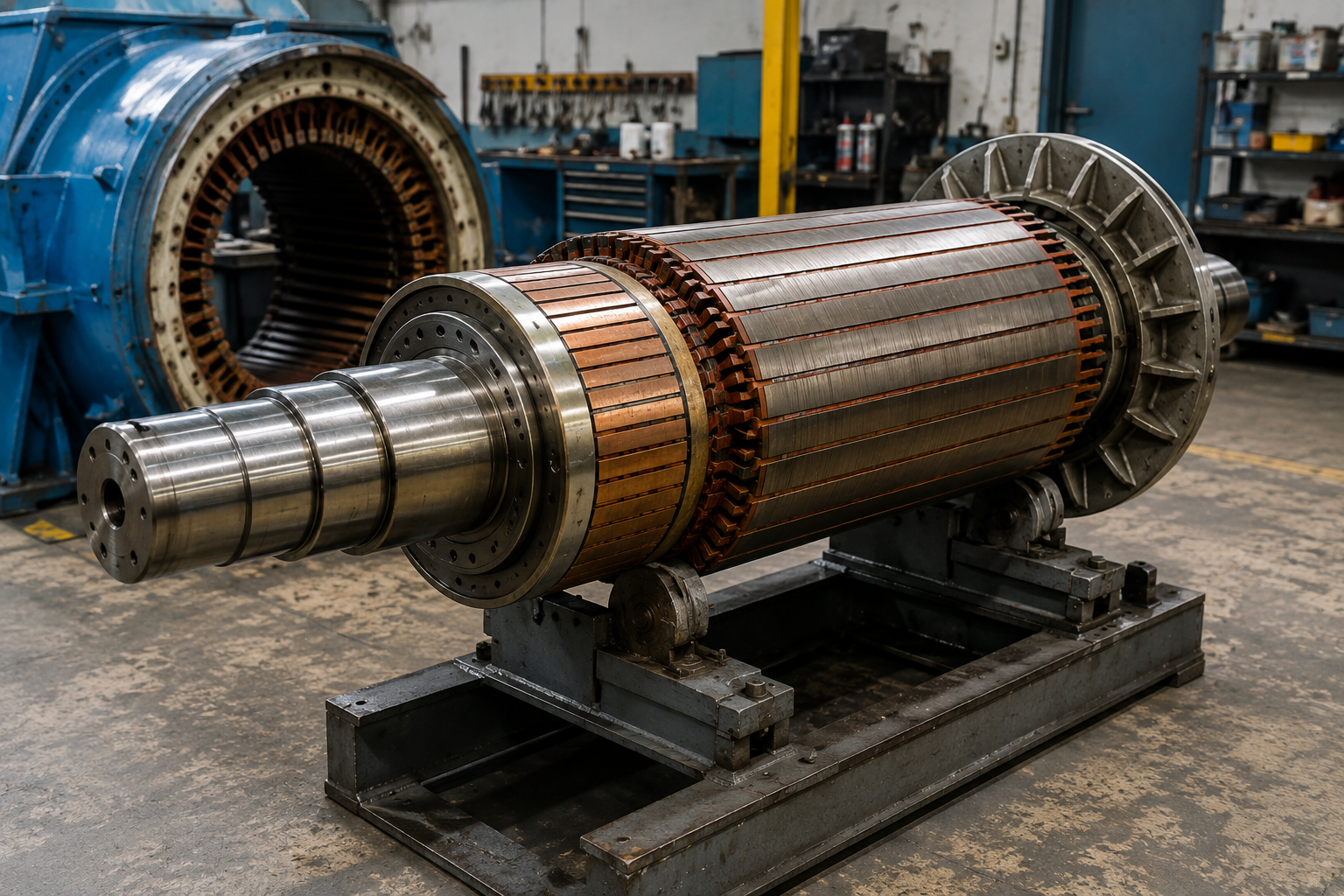
A rotor is one of the most heavily used components inside many electric motors and generators. It rotates inside the stator and helps convert mechanical energy into electrical output or electrical energy into mechanical motion. Because the rotor operates under constant movement, heat, vibration, and mechanical load, wear can develop over time.
When damage becomes severe, rotor replacement may be necessary. In other cases, a repair can restore the component without requiring a complete replacement. Understanding the causes of rotor damage, repair possibilities, costs, and inspection methods can help equipment owners make a practical maintenance decision.
What a Rotor Does Inside a Generator
The rotor is the rotating part of an electrical machine. In a generator, mechanical energy turns the rotor while the surrounding magnetic field interacts with the stator to produce electricity.
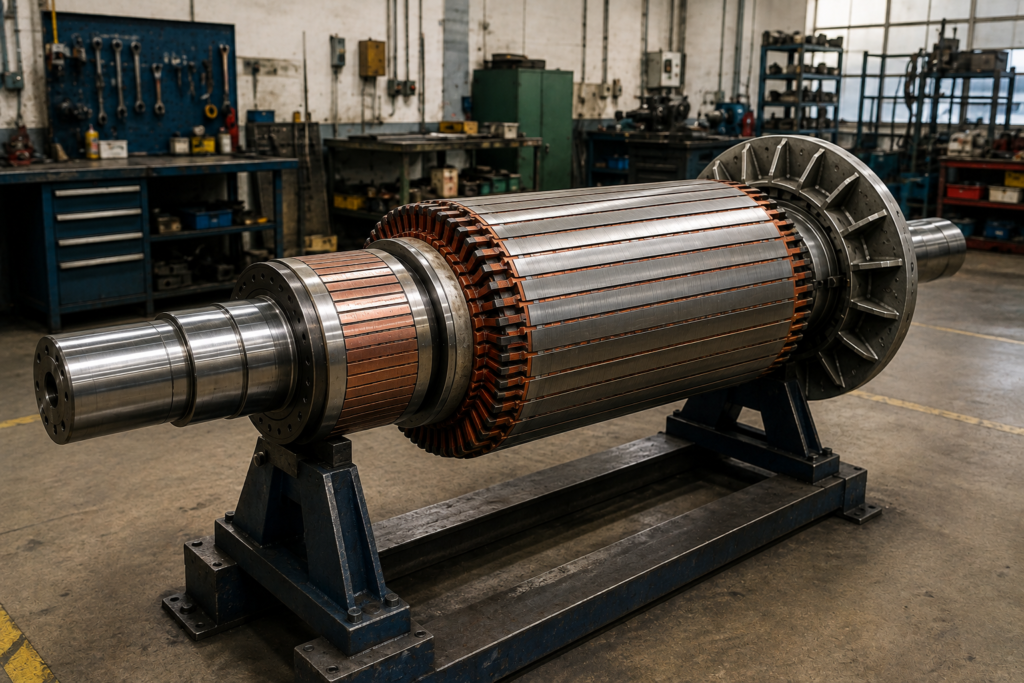
Rotors are built to withstand high rotational speeds and demanding operating conditions. Depending on the generator design, a rotor may contain windings, retaining rings, shafts, laminations, or other precision-machined components.
A small defect can affect the balance and performance of the entire machine. Problems may begin as unusual vibration or temperature changes before developing into more serious mechanical or electrical failures.
Common Reasons for Rotor Damage
Rotor damage can develop gradually or occur suddenly. Several conditions are frequently associated with rotor problems:
- Excessive vibration
- Bearing deterioration
- Shaft misalignment
- Electrical insulation failure
- Overheating
- Mechanical fatigue
- Loose or damaged rotor components
- Corrosion
- Foreign-object damage
- Excessive operating loads
Repeated thermal cycling can also place stress on rotor components. During operation, materials expand as temperatures rise and contract as the equipment cools. Over many operating cycles, this movement can contribute to cracks, loosened connections, or other forms of deterioration.
Poor alignment deserves particular attention. A rotor that does not maintain the correct relationship with the stator can create uneven forces, increasing vibration and accelerating wear.
When Repair Makes More Sense Than Replacement
Not every damaged rotor needs to be replaced. A detailed inspection can determine whether the existing component can be restored safely.
A rotor repair shop may inspect the shaft, windings, laminations, retaining components, and other critical areas. Depending on the damage, repair work can include rewinding, shaft repair, machining, balancing, insulation treatment, or replacement of individual damaged parts.
The decision depends on factors such as the extent of damage, rotor construction, equipment age, availability of replacement parts, expected remaining service life, and repair cost.
A repair may be practical when the main structure remains sound. Replacement may make more sense when the rotor has extensive cracking, severe deformation, major winding damage, or other defects that could compromise reliability after repair.
How Rotor Replacement Costs Are Determined
There is no single price for rotor replacement cost near me because the final expense depends on the machine and the work involved.
Important cost factors include:
- Generator or motor size
- Rotor dimensions and weight
- Rotor design
- Material requirements
- Availability of replacement components
- Machining requirements
- Winding or rewinding work
- Dynamic balancing
- Transportation and handling
- Installation and testing
- Emergency service requirements
A larger industrial generator may require specialized lifting equipment, transportation, machining, and testing. Smaller equipment may have a much simpler replacement process.
The quoted price should therefore be based on inspection and equipment specifications rather than a generic price range. A professional assessment can also identify related problems that might cause a newly installed rotor to fail prematurely.
Warning Signs That Should Not Be Ignored
Several symptoms can indicate that a rotor requires inspection. Increased vibration is one of the most common warning signs. Changes in vibration levels can result from imbalance, misalignment, bearing problems, shaft damage, or rotor deformation.
Other signs include unusual operating noise, excessive temperature, reduced generator output, repeated electrical faults, and visible damage discovered during maintenance.
A sudden change in operating behavior deserves attention even when the generator is still producing power. Continuing to run equipment with an unresolved rotor problem can increase mechanical stress and potentially damage other components.
Routine vibration monitoring and electrical testing can help identify developing problems before they result in an unplanned shutdown.
What Happens During Generator Rotor Repair
Generator rotor repair generally begins with inspection and testing. Technicians may record shaft dimensions, inspect windings, check insulation condition, examine retaining components, and measure rotor balance.
The rotor may then be cleaned and examined for cracks, wear, corrosion, or deformation. Specialized testing methods can be used when internal or surface defects are suspected.
Depending on the findings, technicians may repair damaged areas, replace worn components, restore insulation, machine the shaft, or rewind the rotor. Dynamic balancing is often an important part of the process because even a relatively small imbalance can produce significant forces at high rotational speeds.
After repairs, the rotor should undergo appropriate testing before returning to service. Testing requirements vary according to the machine design and the nature of the repair.
Why Precision Balancing Matters
Rotor balance has a direct effect on machine vibration. At operating speed, even a small imbalance can generate considerable centrifugal force.
Dynamic balancing checks how the rotor behaves while rotating and identifies the amount and location of correction required. The objective is to bring the rotating assembly within the manufacturer’s or applicable engineering specifications.
Balancing should not be treated as an optional finishing step. Incorrect balance can contribute to bearing wear, shaft stress, vibration, noise, and reduced equipment life.
For large industrial machines, balancing may require specialized equipment capable of handling heavy rotors at controlled speeds.
Choosing Rotor Repair Services
Selecting suitable rotor repair services requires more than comparing quoted prices. The repair provider should have experience with the type, size, and application of the equipment involved.
Useful questions include:
- Does the facility handle rotors of the required size and weight?
- Can it perform electrical and mechanical inspections?
- Does it provide dynamic balancing?
- Are machining and winding capabilities available?
- Can testing be completed after repairs?
- Does the provider document inspection findings?
- Can it identify the cause of the original failure?
Documentation is particularly useful for industrial equipment because it provides a record of measurements, repairs, testing, and recommendations for future maintenance.
Situations That May Require Power Generator Rotor Repair
Power generator rotor repair can be required after electrical faults, mechanical failures, overheating, excessive vibration, or prolonged operation under demanding conditions.
Large power-generation equipment often requires careful planning before the rotor is removed. Access, lifting arrangements, transportation, inspection procedures, and replacement components may all need to be coordinated.
A repair provider may also examine associated parts such as bearings, couplings, shafts, and alignment points. Addressing only the visible rotor damage without identifying the underlying cause can leave the machine vulnerable to another failure.
Replacement or Repair: A Practical Decision
The choice between repairing and replacing a rotor should be based on condition rather than assumption. A damaged rotor with a sound core and repairable components may provide years of additional service after proper restoration.
A severely damaged or aging rotor may present a different situation. If repairs would require extensive machining, rewinding, or replacement of multiple major components, a new rotor may offer better long-term value.
The right decision usually comes from comparing the repair scope, replacement availability, expected service life, downtime, and total cost of returning the equipment to dependable operation.
See also: How a Car Mileage Tracker App Can Simplify Business Mileage Records
Preventing Repeat Rotor Problems
Good maintenance can reduce the likelihood of serious rotor damage. Regular vibration checks, alignment inspections, bearing maintenance, temperature monitoring, and electrical testing can reveal changes before they become major failures.
Operating equipment within its rated limits also matters. Overloading, inadequate cooling, poor lubrication, and neglected maintenance can place additional stress on rotating components.
Keeping accurate maintenance records makes it easier to identify recurring issues and plan repairs before an emergency shutdown occurs.
For equipment showing persistent vibration, abnormal temperatures, electrical faults, or visible rotor damage, a professional inspection is a sensible first step. Rotor replacement should be considered after the condition of the existing assembly has been properly evaluated and the cause of the failure has been investigated.