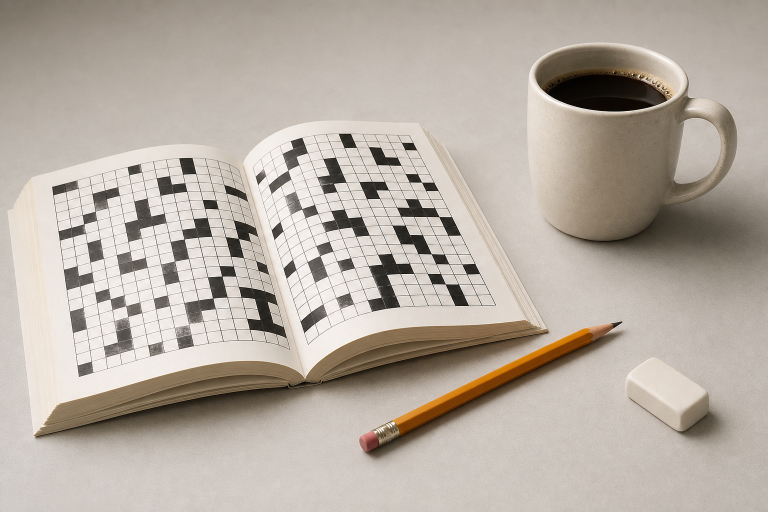
A crossword habit can be a welcome pause in a busy day. Whether you solve over coffee, during a lunch break, on a commute, or before bed, a few thoughtful clues can provide a screen-free challenge that is easy to start, stop, and enjoy at your own pace. For people who prefer printed puzzles, crossword books from Penny Dell Puzzles offer home-delivered collections for beginners through experienced solvers. As a longtime puzzle publisher with books built around different formats and difficulty levels, Penny Dell Puzzles gives readers across the United States a practical option for creating a dedicated at-home solving routine.
The goal is not to turn every puzzle into a test of memory or speed. Crosswords can support curiosity, concentration, and vocabulary growth, but they work best alongside sleep, movement, relationships, medical care when needed, and other healthy habits.
Why Crosswords Fit Modern Daily Routines
Unlike hobbies that require equipment, travel, or a long block of free time, crossword solving is portable and flexible. A pencil and a puzzle book can sit in a kitchen drawer, a tote bag, or on a bedside table. You might solve five clues before leaving home, return to the same grid later, and finish it over the weekend.
Paper puzzles are especially useful when much of the day already involves a phone or computer. They provide a focused activity without notifications, tabs, or pressure to respond immediately. Crosswords can also be social. A couple, a parent and child, a roommate pair, or a small group can work through difficult clues together and enjoy the conversation that follows.
What Puzzles Can and Cannot Do for Brain Health
Mentally engaging activities such as reading, writing, games, and learning new skills may be valuable parts of a healthy lifestyle. Still, research does not prove that crosswords alone prevent dementia or memory loss. As expert coverage of crossword research explains, puzzle use is often associated with stronger cognitive performance, but association is not the same as a direct cause.
A broader approach matters more. The National Institute on Aging notes that physical activity, social connection, management of health conditions, and meaningful mental activity can all support cognitive health. A crossword is best viewed as one enjoyable component of that larger picture, not a substitute for exercise, treatment, or professional medical advice.
Choose a Challenge That Builds Confidence
The right puzzle should make you think without making you want to quit. A grid may be too easy if you finish it without pausing or encountering a new idea. It may be too difficult if nearly every answer requires a lookup, or if a few clues make you abandon the whole page.
Start with easier puzzles and move up gradually. Large-print layouts, familiar categories, and themed crosswords can help newer solvers gain traction. Look for clues that feel understandable with some effort, then use the crossing answers to confirm your thinking.
Build a Simple, Sustainable Routine
- Choose an existing time slot. Attach solving to coffee, a train ride, lunch, or a quiet evening.
- Begin with 10 to 15 minutes. A short session is easier to repeat than an ambitious plan to finish a full puzzle daily.
- Keep supplies together. Store a pencil, eraser, and puzzle book where you are likely to use them.
- Stop while it is still pleasant. Leaving a few clues for later can make tomorrow’s session inviting.
- Skip the streak pressure. Missing a day does not erase progress. Return when you can.
Use Different Solving Styles and Techniques
Variety keeps the habit fresh. Solve alone when you want quiet focus, then invite a friend or family member to tackle a weekend puzzle. Alternate quick weekday grids with longer sessions, and mix familiar topics with clues that introduce unfamiliar words, places, or cultural references. Keeping a small list of new terms turns a finished puzzle into a compact learning exercise.
- Start with short answers and direct-definition clues.
- Use crossing letters to test a guess before committing to it.
- Notice tense, punctuation, abbreviations, and singular or plural wording.
- Leave a stubborn clue and revisit it after filling nearby entries.
- Use a dictionary or reference source when learning is more important than solving on your own.
- Review incorrect answers to recognize clue patterns you may see again.
See also: How a Car Mileage Tracker App Can Simplify Business Mileage Records
Make the Hobby Enjoyable, Not Stressful
Completion time is only one measure, and often not the most useful one. Better signs of progress include more patience with tricky clues, a growing comfort with wordplay, new vocabulary, and a routine you genuinely want to maintain. Hints, corrections, and unfinished grids are normal parts of learning.
Use a simple rule: if a puzzle causes more frustration than interest, change the difficulty, switch formats, or take a break. A healthy crossword routine should create a satisfying challenge, not another daily obligation.
Common Questions About Crossword Habits
How often should someone solve a crossword?
Two or three short sessions per week are a realistic starting point. Daily solving can be enjoyable, but consistency matters more than maintaining a perfect streak.
Are crosswords good for beginners?
Yes. Begin with accessible puzzles, use crossing letters freely, and expect common clue styles to become clearer over time.
Should solvers use a dictionary?
Yes. Looking up an answer can strengthen vocabulary and understanding. The purpose is to learn, not to prove you never need help.
Is paper better than digital?
Neither is automatically better. Paper can reduce screen time, while digital puzzles may offer portability, adjustable settings, and instant feedback.
A Seven-Day Crossword Habit Plan
- Day One: Fill in a few easy clues and learn the grid structure.
- Day Two: Focus on short answers and crossing letters.
- Day Three: Record three unfamiliar words or facts.
- Day Four: Solve with another person or compare answers afterward.
- Day Five: Try a slightly harder puzzle for 15 minutes.
- Day Six: Review missed clues and identify recurring patterns.
- Day Seven: Choose the style and difficulty that felt most enjoyable.
Final Takeaway
Crossword solving works best as a flexible learning habit, not a race or a test. Choose a suitable level, make room for short sessions, learn from mistakes, and pair puzzles with movement, social time, and other interests. With that balanced approach, a crossword can add a little more focus and curiosity to almost any day.