Maintaining consistent product quality is one of the most important priorities in modern manufacturing. Customers expect every product, package, label, and printed material to meet the required standards. At the same time, manufacturers need to maintain high production speeds while controlling waste and operating costs.
Traditional quality-control methods often rely on sampling. A limited number of products or sections of material are checked, while the remaining production is assumed to meet the same standard. Although sampling can be useful, it may allow defects to pass unnoticed.
This is where 100% inspection systems provide a different approach. Instead of checking only selected samples, these systems are designed to inspect the complete production output. In printing and web-based manufacturing, this can mean continuously monitoring the entire surface of a moving material.
What Are 100% Inspection Systems?
100% inspection systems are automated quality-control solutions designed to examine every part of a production process or material rather than relying only on periodic sampling.
In printing environments, cameras and specialized inspection software can continuously monitor a moving web. The captured images are analyzed to identify differences between the expected result and the actual printed material.
The purpose is to reduce the possibility of defective products reaching the next stage of production or, ultimately, the customer.
Why 100% Inspection Is Important
A single defect can sometimes affect a large production order. If quality control is based only on samples, an issue occurring between inspection points may remain undetected.
For example, a printing machine may develop a problem shortly after a manual sample has been checked. If the issue continues for several minutes, a considerable amount of defective material could be produced before the next inspection.
Continuous inspection changes this approach by monitoring production throughout the process.
Rather than asking whether a sample is acceptable, manufacturers can obtain a much broader view of the quality of the complete production run.
How Complete Inspection Works
A typical automated inspection process begins with high-speed imaging.
Cameras positioned along the production line capture images as material passes through the inspection area. Inspection software processes these images and compares them against a reference image, predefined criteria, or other quality parameters.
When an unusual difference is detected, the system can generate an alert. Depending on the production configuration, information about the defect can also be recorded for later review.
This creates a continuous quality-control loop:
- Material enters the inspection area.
- Cameras capture images.
- Software analyzes the captured information.
- Potential defects are identified.
- Operators receive alerts.
- Defect information can be recorded and reviewed.
- Production teams investigate and correct the underlying issue.
Types of Defects That Can Be Identified
The exact inspection capabilities depend on the system and application, but automated inspection can be used to identify many common production problems.
Printing Defects
These can include missing print, smudges, streaks, spots, unwanted marks, and other visual inconsistencies.
Registration Problems
Multicolor printing requires accurate alignment between different elements. Registration errors can affect the appearance of the finished product and may become particularly noticeable on detailed packaging or labels.
Color Differences
Changes in ink application or production conditions can result in unwanted color variation. Automated visual inspection can help identify differences from an approved reference.
Surface Defects
For materials where surface appearance is important, inspection systems can help identify scratches, marks, contamination, or other unwanted imperfections.
The Difference Between Sampling and 100% Inspection
Sampling-based inspection examines selected portions of production. It can be efficient, but it does not provide continuous visibility.
100% inspection takes a more comprehensive approach by monitoring the entire material or production output.
The difference can be summarized simply:
Sampling: inspect selected sections.
100% inspection: continuously inspect the complete production area.
Neither approach should be considered automatically suitable for every application. The correct strategy depends on product requirements, production risks, customer expectations, and available resources.
However, when even occasional defects can have significant consequences, continuous inspection can provide an important additional layer of quality assurance.
Reducing Escaped Defects
An escaped defect is a quality problem that passes through production and reaches a later process or customer.
Preventing these defects is important because correcting a problem after shipment can be considerably more complicated than identifying it during manufacturing.
Automated inspection can help reduce this risk by providing earlier visibility of quality problems.
If a defect begins appearing repeatedly, operators can investigate the printing equipment, material, ink, settings, or other relevant production conditions.
Reducing Material Waste
Waste reduction is another important advantage of early defect detection.
When a problem remains unnoticed, the affected material may continue accumulating. Once the issue is finally discovered, manufacturers may need to discard or rework a larger quantity.
Continuous inspection can help shorten the time between defect creation and detection.
The sooner an operator becomes aware of a problem, the sooner corrective action can potentially be taken.
Supporting High-Speed Production
Modern production lines can operate at speeds that make continuous manual inspection challenging.
An operator cannot realistically maintain the same level of visual concentration throughout an entire shift while observing rapidly moving material.
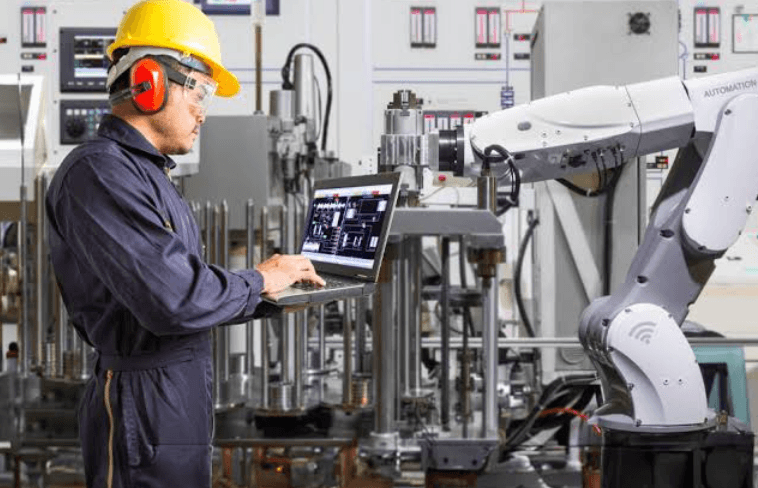
Automated systems are designed to perform repetitive monitoring continuously. This allows human operators to focus on decision-making, machine management, and corrective actions rather than attempting to visually examine every part of the production output.
Improving Quality Consistency
Consistency is particularly important for printed packaging, labels, and branded materials.
Customers expect different production batches to maintain a similar appearance. Significant differences in graphics, color, registration, or surface quality can create quality concerns.
Continuous inspection can help manufacturers identify variations during production and respond before the issue becomes widespread.
Creating Better Production Visibility
Another benefit of 100% inspection is improved visibility into the production process.
When defects are detected and recorded systematically, quality teams can analyze what types of problems occur most often.
This information can help answer questions such as:
- Which defects occur most frequently?
- At what stage are problems appearing?
- Are defects isolated or recurring?
- Are certain materials more difficult to process?
- Is a particular machine setting associated with repeated issues?
The answers can support better production decisions.
Combining Automation With Human Expertise
Automated inspection does not mean that operators are no longer important.
Technology can identify potential problems, but people are still responsible for interpreting the information and determining appropriate corrective action.
For example, if the inspection system detects a recurring streak, an operator may need to investigate the printing unit or material path to determine the cause.
The strongest quality-control strategy combines automated monitoring with experienced human oversight.
Factors to Consider When Selecting a System
Manufacturers should evaluate several factors before implementing a complete inspection solution.
These may include:
- Production speed
- Material type
- Web width
- Required inspection resolution
- Types of defects that need to be detected
- Lighting conditions
- Camera configuration
- Software capabilities
- Production-line integration
- Operator interface
- Reporting and data requirements
A solution should be selected according to the actual manufacturing environment and quality objectives.
Implementing 100% Inspection Effectively
Successful implementation involves more than installing cameras.
Manufacturers should first identify the defects that have the greatest impact on product quality. They can then determine where inspection should take place and what reference standards should be used.
Operators should also receive appropriate training so they understand inspection alerts and know how to respond.
Regular system maintenance and calibration are equally important. Inspection equipment must remain properly configured to provide reliable results as production conditions change.
Applications in Printing and Web Manufacturing
Complete inspection can be useful in industries where materials move continuously through production.
Potential applications include packaging, labels, flexible materials, commercial printing, and other web-based processes.
Each application has different quality requirements. A packaging manufacturer may focus heavily on graphics and registration, while another operation may prioritize surface defects or material consistency.
This makes application-specific inspection planning essential.
Manufacturers interested in automated solutions can explore 100% inspection systems as part of a broader strategy for improving production quality and reducing the risk of missed defects.
Frequently Asked Questions
1. What does 100% inspection mean in manufacturing?
100% inspection means that the complete production output is monitored rather than checking only selected samples. In printing applications, this can involve continuously inspecting the entire web as it moves through production.
2. Can 100% inspection eliminate all defects?
No inspection technology should be considered a guarantee that every possible defect will be eliminated. Performance depends on system configuration, materials, lighting, defect characteristics, software settings, and production conditions. However, appropriate automated inspection can significantly improve defect visibility.
3. Is 100% inspection better than manual inspection?
They serve different purposes. Automated inspection provides continuous monitoring, while human operators provide judgment and corrective decision-making. Combining both approaches can create a stronger quality-control process.
See also: Innovative Business Solutions: Transforming Australian Enterprises
Conclusion
100% inspection systems provide manufacturers with a comprehensive approach to quality control by continuously monitoring production instead of relying solely on samples. In modern printing environments, this can help identify visual defects, improve consistency, reduce waste, and provide earlier awareness of production problems.
The real value of complete inspection lies in its ability to connect quality control with the production process itself. When defects are detected early, operators have a better opportunity to investigate their causes and take corrective action.
For manufacturers operating high-speed production lines, a well-designed automated inspection strategy can become an important part of maintaining reliable quality, improving efficiency, and reducing the risk of defective material moving further through the production chain.