Thermal processing is an essential part of modern glass manufacturing. As factories look for more consistent and efficient production methods, heating technology has become an important area of consideration.
Air circulation can influence how heat moves through a processing environment. Properly designed circulation systems can support a controlled thermal process and help manufacturers manage different production requirements.
Understanding Forced Air Heating
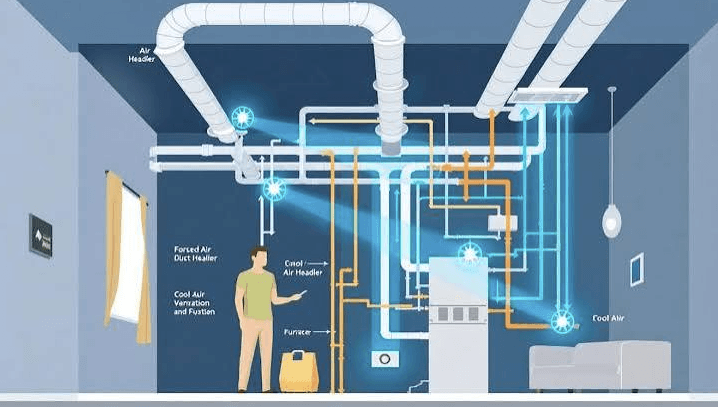
Forced air systems use controlled air movement to support heat transfer within the processing area. The objective is to create a stable environment where the glass can receive appropriate thermal treatment.
The effectiveness of a heating system depends on several factors, including equipment design, temperature settings, airflow, glass specifications, and production speed.
Manufacturers should evaluate these factors together rather than considering heating technology in isolation.
Supporting Uniform Thermal Conditions
Uniform heating is important because variations across a glass sheet can affect the subsequent processing stages.
Controlled air movement can contribute to a more consistent thermal environment when properly integrated into the equipment design.
Operators should monitor production conditions and follow established procedures for different glass specifications.
Adapting to Different Products
Glass manufacturers may process products with different dimensions and thicknesses. Each specification can have different thermal requirements.
A production system should therefore provide sufficient control to accommodate these variations.
Clear documentation of process parameters can help operators maintain consistency when changing from one product specification to another.
Continuous Production Requirements
For high-volume manufacturers, maintaining a steady workflow is particularly important. Interruptions in heating or transportation can affect downstream operations.
Continuous systems can connect different stages of production and reduce unnecessary pauses.
During equipment selection, manufacturers can research solutions such as the EASTTEC Forced Convection Continuous Heating Machine and compare their features with the factory’s production requirements.
Improving Energy Management
Heating equipment can represent a significant part of manufacturing energy use. Businesses should monitor consumption and evaluate whether equipment is operating efficiently.
Regular maintenance can help maintain equipment performance, while appropriate production scheduling can reduce unnecessary operation during idle periods.
Energy efficiency should be considered alongside output and product quality.
Importance of Temperature Monitoring
Temperature monitoring provides operators with information about the thermal process. If readings move outside expected ranges, the production team can investigate the cause.
Monitoring equipment should be maintained and checked according to appropriate technical procedures.
Accurate data can also help manufacturers compare different production runs.
See also: Revolutionising Medical Diagnostics with Advanced Imaging Technology
Maintaining Airflow Components
Air circulation systems contain mechanical and control components that require regular attention. Fans, ducts, sensors, and related parts should be inspected according to maintenance requirements.
Dust and other contaminants can affect equipment performance if cleaning is neglected.
A preventive maintenance schedule can help reduce unexpected interruptions.
Operator Training
Employees should understand how heating systems operate and how different glass specifications affect processing requirements.
Training should include machine controls, production procedures, safety, quality checks, and response to abnormal conditions.
Well-defined operating procedures can also reduce variation between different production shifts.
Measuring Results
Manufacturers can evaluate heating performance through practical indicators such as:
- Production output
- Defect rates
- Temperature stability
- Energy consumption
- Downtime
- Maintenance frequency
These measurements can help identify areas where process improvements may be useful.
FAQs
1. What is forced air circulation in glass heating?
It is a heating approach that uses controlled air movement to support heat transfer within the processing environment.
2. Why is temperature monitoring important?
Monitoring helps operators identify changes in thermal conditions and maintain suitable processing parameters.
3. How can heating efficiency be improved?
Regular maintenance, appropriate operating settings, energy monitoring, and organized production scheduling can support better efficiency.
Conclusion
Controlled air circulation can be an important part of modern glass heating systems, particularly where manufacturers require stable thermal conditions and continuous production. By combining suitable equipment with monitoring, maintenance, energy management, and trained operators, manufacturers can create a more consistent thermal processing environment.