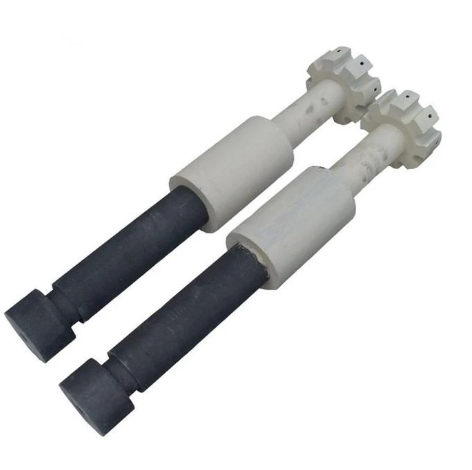
Inside nearly every aluminum melting and holding furnace involved in producing clean, high-quality aluminum, a component spins continuously beneath the surface of the molten metal, doing work that is largely invisible to anyone outside the immediate process but absolutely critical to the quality of the finished product. That component is the graphite rotor, and understanding exactly what it does, how it is engineered, and why its material quality matters so much helps explain why this single part plays such an outsized role in modern aluminum casting and processing operations.
What a Graphite Rotor Actually Does
A graphite rotor sits at the heart of the degassing process used to purify molten aluminum before it is cast into its final form. As aluminum melts, it naturally absorbs hydrogen gas from the surrounding atmosphere and moisture in the furnace environment. If left untreated, this dissolved hydrogen creates porosity defects in the finished aluminum product, weakening its structural integrity and compromising surface quality , problems that become especially unacceptable in applications like automotive components, aerospace parts, or aluminum foil where consistency and structural reliability are non-negotiable.
The graphite rotor addresses this problem through mechanical action. Mounted on a shaft and submerged into the molten aluminum, the rotor spins at high speed while inert gases such as argon or nitrogen are pumped through it. This rotation breaks the inert gas into an enormous number of extremely fine bubbles that disperse throughout the molten metal. As these tiny bubbles rise through the aluminum, dissolved hydrogen migrates into them and is carried up and out of the melt, while the same process also helps float out solid inclusions and impurities that would otherwise remain suspended in the finished metal.
Why Graphite Is the Material of Choice
The rotor’s operating environment is genuinely extreme: constant submersion in molten aluminum at temperatures around 700 to 750 degrees Celsius, combined with continuous high-speed rotation that subjects the component to significant mechanical stress. Very few materials can survive this combination of thermal and mechanical demands while still being precisely machinable into the specific blade and channel geometries required for effective gas dispersion. Graphite’s unique combination of heat resistance, mechanical stability at high temperature, and machinability makes it uniquely suited to this application, which is precisely why the material has remained the industry standard for rotor construction across decades of aluminum processing technology development.
That said, not all graphite performs equally well in this demanding role. High-density, fine-grain isostatic graphite generally delivers the best combination of mechanical strength and erosion resistance needed to withstand prolonged exposure to molten aluminum flux without excessive wear, which is why premium rotor manufacturers specifically select this grade over more general-purpose graphite alternatives that might be adequate for less demanding applications.
Anti-Oxidation Treatment and Extended Service Life
One of the most significant engineering advances in modern graphite rotor design involves anti-oxidation surface treatment. Raw graphite, when continuously exposed to the combination of high temperature and the chemically active environment inside a molten aluminum furnace, gradually oxidizes and erodes over time, shortening the component’s useful service life and requiring more frequent, costly replacement.
Anti-oxidation coating and impregnation processes address this challenge directly, creating a protective barrier that significantly slows this degradation process. Rotors treated with effective anti-oxidation processes can last meaningfully longer than untreated graphite components operating under otherwise identical conditions, translating directly into lower replacement frequency and reduced total operating cost for aluminum processing facilities that depend on these components running continuously across long production cycles.
| Rotor Feature | Function | Benefit to Operation |
| High-density isostatic graphite | Base material construction | Mechanical strength, erosion resistance |
| Anti-oxidation treatment | Protective surface barrier | Extended service life, fewer replacements |
| Custom blade/channel geometry | Gas dispersion design | Optimized bubble formation and degassing efficiency |
| Precision shaft fit | Mechanical coupling | Stable high-speed rotation without vibration |
| Silicon nitride variants | Advanced ceramic-coated option | Ultimate erosion resistance against harsh fluxes |
Silicon Nitride Rotors: The Next Step in Durability
For operations handling particularly harsh flux conditions or requiring even longer service intervals, silicon nitride degassing rotors represent a further evolution beyond standard anti-oxidation-treated graphite. These rotors incorporate composite or advanced ceramic-coated designs specifically engineered to provide superior erosion resistance in the most demanding molten metal environments. While typically representing a higher upfront investment than standard treated graphite rotors, the extended service life and reduced replacement frequency can make silicon nitride variants the more cost-effective choice for high-volume operations where rotor downtime for replacement directly interrupts production output.
Custom Engineering for Specific Furnace Configurations
Because aluminum melting and degassing equipment varies significantly between manufacturers and facility configurations, graphite rotor sizing and design typically requires customization rather than relying on a single universal standard component. Outer and inner diameter, shaft length, blade configuration, and mounting specifications all need to match the specific degassing unit a rotor will be installed into. Reputable rotor manufacturers work from customer-provided equipment specifications or drawings to produce rotors and matching shafts precisely fitted to a facility’s existing degassing machinery, rather than forcing operations to redesign equipment around a limited range of standard sizes.
This customization extends to performance tuning as well. Facilities processing different aluminum alloys, operating at different production volumes, or dealing with varying levels of hydrogen contamination in their raw material may benefit from rotor designs optimized specifically for their particular operating conditions, something a knowledgeable manufacturer can help specify based on a facility’s actual production parameters rather than a generic one-size-fits-all approach.
Where Graphite Rotors Make the Biggest Difference
Aluminum casting foundries rely heavily on properly functioning graphite rotors to ensure clean, low-porosity ingots and billets, particularly in hot top billet casting operations where metal quality directly affects downstream processing success. Aluminum melting and holding furnaces across the broader industry depend on consistent rotor performance to maintain clean melt quality before pouring, since even minor lapses in degassing effectiveness can introduce defects that only become apparent much later in the production process. Aluminum foil and extrusion plants, where the finished product must be essentially defect-free to meet exacting downstream manufacturing requirements, represent perhaps the most demanding application for rotor performance, since even minor porosity or inclusion issues can render finished material unsuitable for its intended use.
Recognizing When a Rotor Needs Replacement
Operations relying on graphite rotors benefit from monitoring a few practical indicators that signal when replacement is approaching. Visible erosion or pitting on the rotor surface, changes in degassing performance despite consistent gas flow settings, and increased vibration during operation can all indicate that a rotor has reached the end of its effective service life. Establishing a routine inspection schedule, rather than waiting for a noticeable quality problem in the finished aluminum product, allows operations to plan replacement proactively and avoid the more costly consequences of continuing to run a degraded rotor past its effective working life.
A Component Worth Understanding, Not Just Replacing
Because a graphite rotor operates continuously out of sight beneath the surface of molten metal, it is easy for maintenance teams to treat it as a routine consumable rather than a component whose specification genuinely affects finished product quality. Yet the difference between a well-specified, properly treated rotor and a generic, poorly matched substitute shows up directly in measurable outcomes: hydrogen content in the finished aluminum, the rate of porosity-related defects, and ultimately the consistency of the material moving downstream into casting, extrusion, or foil production. Treating rotor selection with the same technical seriousness applied to other critical process equipment tends to pay off in fewer quality escapes and more predictable production outcomes over time.
Choosing a Reliable Graphite Rotor Supplier
Given how directly rotor performance affects finished metal quality, sourcing from a manufacturer with genuine expertise in this specific application matters considerably more than treating it as a generic graphite component purchase. A specialist supplier of the graphite rotor category should be able to discuss anti-oxidation treatment options, silicon nitride alternatives, and custom engineering for specific furnace configurations in detail, reflecting genuine technical depth in this particular application rather than surface-level product knowledge. Reviewing a dedicated graphite rotor product line before placing an order allows buyers to compare available material grades, treatment options, and customization capabilities, helping ensure the component selected will genuinely match the specific demands of their aluminum processing operation rather than simply serving as a generic replacement part.