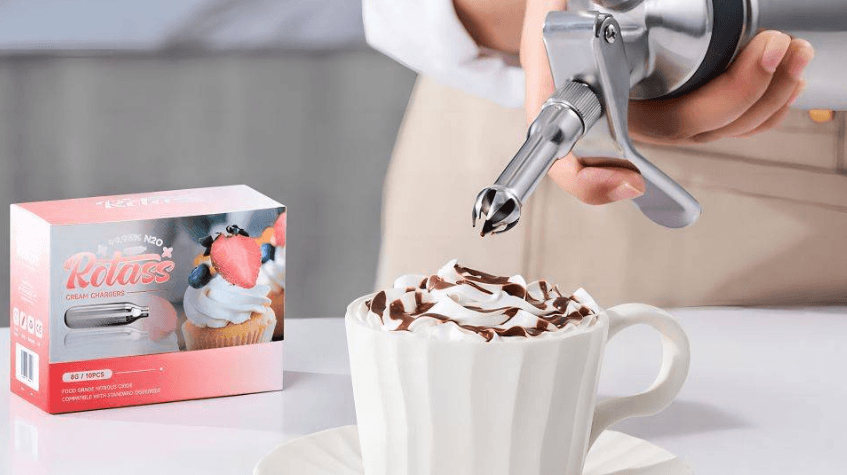
A reliable rotass cream charger can be a useful tool in professional and home kitchens where chefs and food enthusiasts want to prepare fresh whipped cream efficiently. Cream chargers are commonly associated with culinary applications such as desserts, beverages, pastries, and decorative toppings. When selected carefully and used with compatible equipment, they can make food preparation more convenient while helping achieve a smooth and consistent texture.
However, choosing the right charger involves more than simply looking at the product size. Kitchen professionals should consider compatibility, food-grade quality, storage conditions, handling practices, and the requirements of their specific dispenser. Understanding these factors helps create a safer and more organized kitchen workflow.
What Is a Cream Charger?
A cream charger is a small pressurized container designed for use with a compatible cream dispenser. It contains food-grade nitrous oxide, which is used in culinary equipment to aerate cream and create a light, stable texture.
When used correctly with an appropriate dispenser, the gas helps transform liquid cream into whipped cream without requiring traditional mechanical whipping. This makes the process particularly convenient for cafés, bakeries, restaurants, catering businesses, and home kitchens.
Cream chargers should always be treated as pressurized culinary products. They are intended for their specified food applications and should never be modified or used outside the manufacturer’s instructions.
Why Quality Matters in a Cream Charger
The quality of a charger can influence both the preparation process and the final result. A dependable product should be manufactured to appropriate food-use standards and designed for compatibility with the dispenser being used.
One important consideration is consistency. Professional kitchens often prepare multiple servings throughout the day, so predictable performance is valuable. A charger that works consistently can help reduce interruptions and make preparation more efficient.
Another consideration is cleanliness and product integrity. Food-related equipment should be handled carefully to avoid contamination. Chargers should remain properly sealed and stored in suitable conditions until they are required.
For businesses, these factors can become especially important because customers expect consistent quality from one serving to the next.
Choosing the Right Charger for Your Kitchen
Before selecting a cream charger, it is useful to understand the equipment already available in the kitchen. Different dispensers may have specific requirements concerning charger compatibility, capacity, and operating instructions.
Consider the following points:
Check dispenser compatibility
Always check the manufacturer’s instructions for the dispenser before using a charger. Compatibility should never be assumed simply because two products appear similar.
Consider kitchen requirements
A small home kitchen may have very different requirements from a busy restaurant or bakery. Think about the quantity of whipped cream normally prepared and how frequently the equipment is used.
Look for appropriate quality standards
For food preparation, product quality is an important consideration. Choose chargers intended specifically for culinary applications and follow the manufacturer’s stated handling instructions.
Review storage requirements
Pressurized containers should be stored according to the manufacturer’s recommendations. They should generally be kept away from excessive heat, direct sunlight, and conditions that could compromise container integrity.
Common Culinary Applications
Cream chargers have a wide range of legitimate culinary applications. Their most familiar use is preparing whipped cream for desserts and beverages, but creative chefs can incorporate aerated cream into many types of presentation.
Whipped cream can be added to cakes, pies, pancakes, waffles, hot chocolate, coffee beverages, fruit desserts, and plated dishes. It can also be used as a decorative component when presentation is important.
In cafés, efficient preparation can help staff maintain consistency during busy service periods. In bakeries and pastry kitchens, an appropriate dispenser and charger system can make finishing certain desserts more convenient.
The key is to use the equipment according to its intended culinary purpose and the instructions supplied by the manufacturer.
Safe Handling Practices
Because cream chargers contain compressed gas, safe handling should always be part of normal kitchen procedures. Staff should read the equipment instructions before use and understand how the dispenser and charger are designed to work together.
Chargers should not be punctured, heated, damaged, altered, or exposed to unnecessary physical stress. They should also be kept away from children and stored appropriately when not in use.
After a charger has been used, it should be handled and disposed of according to applicable local waste-management requirements. Commercial kitchens may also establish internal procedures for storing and disposing of used pressurized containers.
These simple precautions can help reduce avoidable risks while maintaining an organized food-preparation environment.
Maintaining Consistent Whipped Cream
The charger itself is only one part of the process. The condition of the cream, cleanliness of the dispenser, temperature, and preparation technique can all affect the final texture.
Cold cream generally performs better for whipped-cream preparation than cream that has been left at room temperature. The dispenser should also be clean before each preparation cycle.
Kitchen staff should avoid overfilling the dispenser and should follow its recommended capacity. Using the correct amount of cream and following the manufacturer’s instructions can help achieve more predictable results.
Consistency is particularly important for businesses. Standardized preparation procedures can help different members of a kitchen team produce similar results throughout the day.
What Businesses Should Consider
Restaurants, cafés, bakeries, and catering companies should look at cream chargers as part of their wider kitchen equipment system rather than as an isolated product.
A business may benefit from establishing clear procedures covering storage, dispenser cleaning, staff training, and product usage. Keeping these processes organized can improve efficiency and reduce mistakes during busy service.
Businesses should also select products through reputable channels and verify that the product is intended for the specific culinary application required. Instead of focusing only on quantity, decision-makers should consider quality, compatibility, consistency, and responsible handling.
For those researching a suitable Rotass cream charger these factors provide a useful starting point for evaluating whether the product fits their culinary workflow.
Mistakes to Avoid
Several simple mistakes can create unnecessary problems. Using an incompatible charger, ignoring dispenser instructions, storing pressurized containers near heat, or failing to clean equipment properly can all affect performance and safety.
Another common mistake is treating a culinary charger as a general-purpose product. Cream chargers should only be used for their intended food-related applications and according to the manufacturer’s directions.
Good kitchen practices are ultimately about consistency and responsibility. Proper training and careful equipment handling are just as important as choosing a quality product.
See also: Emerging Market Trade Shows: An Underrated Growth Channel for Tech Firms
FAQs
1. What is a cream charger used for?
A cream charger is primarily used with a compatible cream dispenser to aerate cream and prepare whipped cream for culinary applications.
2. How should cream chargers be stored?
They should be stored according to the manufacturer’s instructions and kept away from excessive heat, direct sunlight, and damaging conditions.
3. Can any cream charger be used with any dispenser?
No. Compatibility varies between equipment. Always check the dispenser manufacturer’s instructions before selecting and using a charger.
Conclusion
A cream charger can make whipped-cream preparation faster and more consistent when it is used correctly. For both professional kitchens and home users, the most important considerations are food-grade suitability, equipment compatibility, proper storage, cleanliness, and responsible handling.
By focusing on these factors rather than simply choosing the first available product, users can create a more reliable culinary workflow and maintain better standards in everyday food preparation.