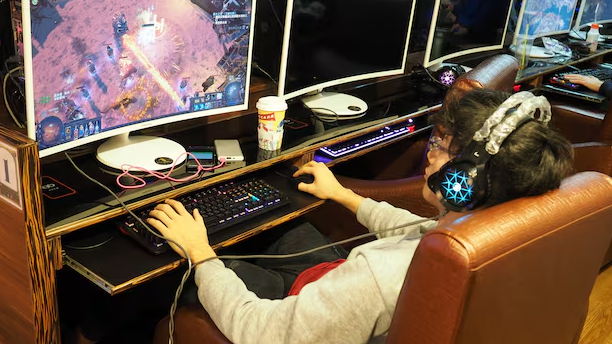
A parent sees the bedroom light on at 3.15 a.m.
The game is still running.
The same thing happened yesterday.
College attendance has become poor, breakfast has disappeared and most conversations end in an argument about the computer.
The obvious conclusion is:
“He is addicted.”
Maybe.
Maybe not.
The World Health Organization deliberately sets a higher threshold than simply spending too much time gaming.
Gaming disorder in ICD-11 involves impaired control over gaming, gaming taking increasing priority over other activities and continued or escalating gaming despite negative consequences. The pattern must produce significant impairment in important areas of life and would normally have been present for at least 12 months.
That definition matters for anyone considering gaming rehab in Mumbai.
The hours matter only after we ask what they replaced
Ten hours during a holiday and ten hours during an ordinary college day are not equivalent.
A student who plays heavily for a week, returns to normal sleep, resumes lectures and continues other interests is not displaying the same pattern as somebody whose education, friendships and daily schedule are being progressively displaced.
WHO itself says gaming disorder affects only a small proportion of people who play digital or video games.
So the useful question is not:
“How many hours?”
It is:
“What has disappeared as gaming expanded?”
Perhaps exercise went first.
Then breakfast.
Then morning lectures.
Then the person stopped seeing friends who did not play the same game.
Eventually the gaming group became the main social world.
Now the issue is much clearer than the screen-time number.
See also: What Is Face Verification? How It Works and Why It Matters
Why would anyone choose a game over real life?
Because games can be extremely good at providing things ordinary life provides slowly.
Progress is visible.
Goals are clear.
Feedback arrives immediately.
Rankings establish status.
Teams provide social belonging.
Someone struggling academically can be highly competent in a gaming environment.
A socially anxious young adult may speak confidently to teammates online while finding an ordinary conversation uncomfortable.
That does not make gaming harmful by definition.
It explains why taking the device away can create a surprisingly large psychological gap.
Treatment has to work with what fills that gap.
Sleep can turn the pattern into a closed loop
Imagine gaming ends at 4 a.m.
The person wakes at noon.
Morning college is already lost.
They feel guilty about what was missed.
By afternoon, gaming becomes the easiest place to avoid that guilt.
The next session starts.
Because they woke at noon, they are not sleepy at midnight.
Another 4 a.m. finish becomes likely.
Now gaming is both contributing to the disrupted schedule and benefiting from it.
That is why rebuilding sleep can matter so much.
It restores hours of the day in which other activities can exist.
Parents can accidentally train everybody to ignore the rules
Monday: no restriction.
Tuesday: six hours.
Wednesday: all-night gaming.
Thursday morning: huge argument and complete ban.
Saturday: the ban disappears because enforcing it has made home unbearable.
The lesson learned is simple.
Wait long enough and the limit goes away.
Predictable boundaries are usually more useful than extreme restrictions nobody can maintain.
That may include expectations around sleep, education, devices in the bedroom, spending on games and household responsibilities.
Different ages require different levels of parental control, obviously.
The principle is consistency.
What would treatment actually try to restore?
This is a better question than whether gaming is “good” or “bad”.
Someone looking for gaming addiction treatment Mumbai should expect assessment of functioning, not simply an argument against technology.
A meaningful recovery might involve waking at a normal time again.
Returning to classes.
Exercise.
Eating with family.
Meeting somebody offline.
Being able to stop a game because another responsibility takes priority.
For some people, a period without gaming may help reset the pattern.
Long-term goals can differ.
An adult whose career involves computers obviously cannot be expected to avoid digital technology permanently. Even teenagers increasingly require devices for education.
The treatment target therefore needs more sophistication than “screen-free”.
WHO recognised gaming disorder because a clinically significant pattern exists.
WHO also deliberately did not classify every enthusiastic gamer as disordered.
Both parts of that position matter.
If treatment starts from the wrong one, either a genuine problem gets dismissed or ordinary enthusiasm gets medicalised.
Neither helps the family standing outside the bedroom at 3.15 in the morning.