A shower enclosure can take up a noticeable amount of visual space in a bathroom. Heavy frames, opaque panels, and bulky hardware can make the room feel divided, particularly when the bathroom itself is compact.
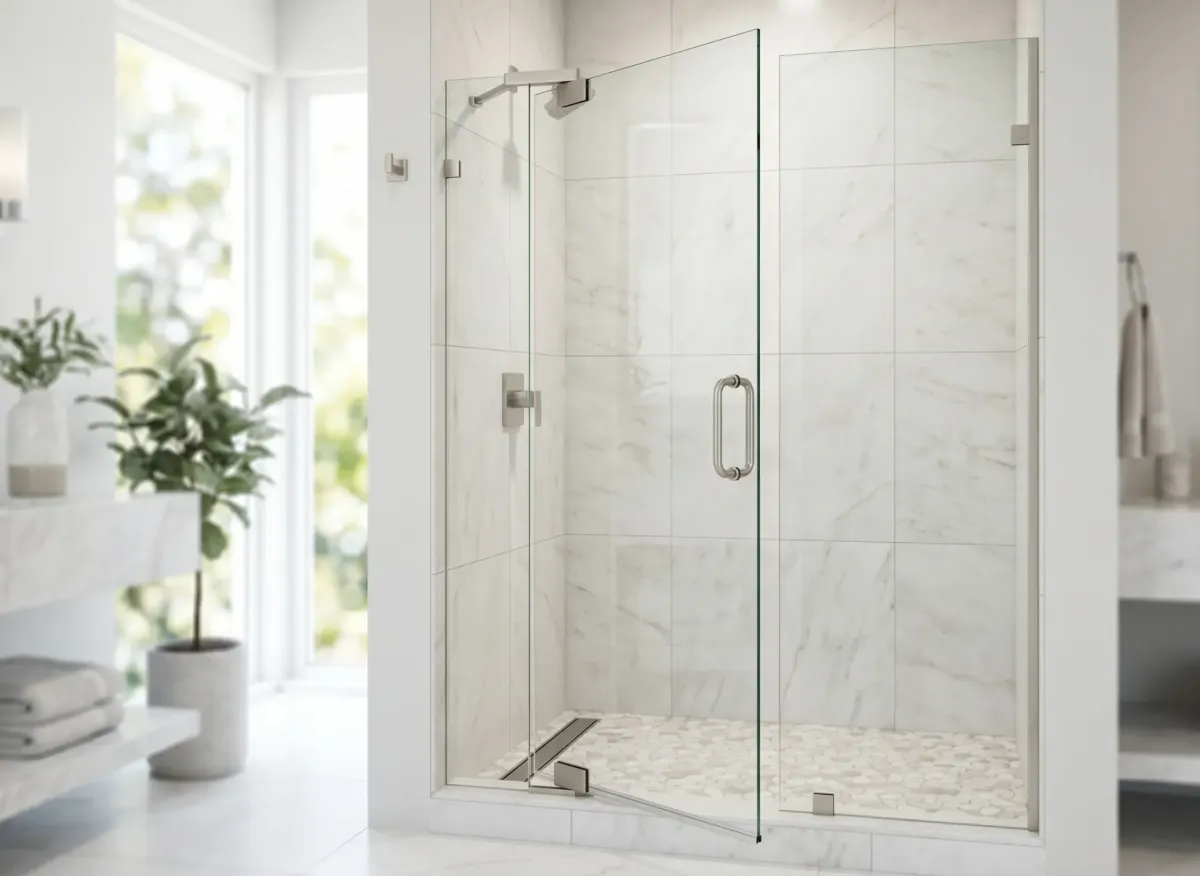
Clear frameless shower doors offer a different approach. With minimal visible framing and transparent glass, they create a clear line of sight through the shower area. Tile patterns, stonework, fixtures, and other design details remain visible instead of being hidden behind a solid enclosure.
The appeal is largely visual, but the design also has practical considerations involving glass, hardware, measurements, installation, and everyday maintenance.
Keeping the Bathroom Visually Open
Clear glass allows the shower to remain connected visually with the rest of the bathroom.
In a small room, this can make a meaningful difference. Instead of creating a separate visual block, the shower enclosure becomes a more subtle part of the overall space.
The same principle works in larger bathrooms. A frameless enclosure can showcase a feature wall, decorative tile, built-in niche, or detailed flooring without interrupting the view.
This makes clear glass particularly suitable for bathrooms where the design relies on continuity between different areas.
Minimal Framing Changes the Appearance
Traditional shower enclosures can use metal framing around the perimeter of the glass. While framed systems remain practical for many bathrooms, the visible profiles can become a prominent design feature.
Frameless systems reduce this visual interruption.
The glass is generally supported by hinges, brackets, clips, and other specialised hardware rather than a full surrounding frame. This produces a cleaner appearance while allowing more of the glass surface to remain unobstructed.
The amount of visible hardware varies by design. A completely hardware-free enclosure is not realistic, but carefully selected components can keep the overall appearance understated.
Clear Glass Shows Off the Shower Interior
One advantage of transparent glass is that it does not hide the work that goes into designing the shower itself.
A patterned tile wall, natural stone, decorative niche, rainfall showerhead, or distinctive plumbing fixtures can remain visible from outside the enclosure.
This can be particularly useful when the shower contains a feature finish that was intended to be noticed.
The approach also works well with neutral bathrooms. Even simple tilework can benefit from uninterrupted sightlines because the room feels less visually segmented.
Glass Thickness Matters
Frameless doors typically require suitable glass thickness because the glass itself carries more of the structural responsibility than it would in a fully framed enclosure.
Tempered safety glass is commonly used for shower doors. The appropriate thickness depends on the door dimensions, configuration, hardware, and manufacturer’s specifications.
Larger doors may require different hardware or glass specifications from smaller panels. This is why glass should not be selected simply by appearance or price.
The wall structure also needs to be capable of supporting the hinges and associated hardware. Proper installation is essential for safe and reliable operation.
Choosing the Right Door Configuration
Not every bathroom has enough space for the same type of frameless door.
A hinged door requires adequate clearance to swing. A pivot configuration may work differently depending on the available opening, while a fixed panel can be used where only partial enclosure is required.
Some bathrooms may use a combination of fixed glass panels and a hinged door. This can create a wider enclosure while keeping the moving portion of the system manageable.
The placement of nearby toilets, vanities, towel bars, walls, and other fixtures should be checked before the final configuration is selected.
Hardware Adds Small Details to the Design
The hinges, handle, clips, and brackets are functional components, but they also influence the appearance of the enclosure.
Chrome remains a common finish, while brushed metal, matte black, and other finishes can be matched with the bathroom’s existing fixtures.
For example, a bathroom with black faucets and shower controls may use matching black hardware on the glass enclosure. A bathroom with polished metal fixtures may benefit from a coordinated finish.
Consistency matters more than the specific finish. Matching the door hardware with other visible fittings can make the enclosure feel like part of the original design.
Accurate Measurements Are Essential
Frameless shower doors depend heavily on precise measurements.
Walls are not always perfectly square or plumb, particularly in older bathrooms or spaces that have undergone renovation. Even small variations can affect the fit and movement of a glass door.
Measurements should account for the finished wall surfaces, floor or shower base, opening dimensions, and location of plumbing fixtures.
For custom glass installations, a professional site measurement can help identify irregularities before the glass is ordered.
Keeping Water Inside the Shower
A frameless enclosure can provide effective water containment, but it does not create a completely sealed room.
Small gaps are often part of the design, particularly around hinged doors and between fixed panels. The position of the showerhead, door swing, panel size, and bathroom layout all affect how much water can escape.
Appropriate seals or sweeps may be used where required. However, shower spray should generally be directed away from open gaps and toward the interior walls.
The floor also needs suitable drainage and waterproofing so that any water reaching the bathroom floor can be handled properly.
Easier Cleaning Around the Enclosure
One practical benefit of minimal framing is having fewer metal channels where soap residue, dirt, and moisture can accumulate.
A frameless enclosure has fewer enclosed profiles than many traditional framed systems. This can make routine cleaning more straightforward.
Clear glass does require regular attention, particularly in areas with hard water. Mineral deposits can become visible on transparent surfaces if they are allowed to build up.
Wiping the glass after use and cleaning it with suitable bathroom products can help maintain its appearance.
A Good Fit for Different Bathroom Styles
Clear frameless glass does not belong exclusively to one design style.
It can complement:
- Modern bathrooms
- Minimalist interiors
- Contemporary renovations
- Luxury bathrooms
- Traditional spaces
- Small ensuite bathrooms
- Large walk-in showers
Because the glass itself is visually neutral, it can work alongside many different tile colours, materials, and fixtures.
The surrounding finishes often determine the overall character of the bathroom, while the glass simply allows those features to remain visible.
When Frameless May Not Be the Right Choice
Despite its visual advantages, frameless glass is not automatically suitable for every bathroom.
A bathroom with limited door clearance may require a different configuration. Some installations may also benefit from additional framing for structural or water-containment reasons.
Budget is another consideration. Frameless systems can require thicker glass and specialised hardware, which may increase the overall installation cost.
The existing walls and shower base also need to be suitable for the installation. These factors should be reviewed before committing to a particular design.
Planning a Frameless Shower Door
Before choosing clear frameless shower doors, it helps to review the complete shower area rather than selecting the glass separately.
Consider:
- Shower opening dimensions
- Wall alignment
- Glass thickness
- Door swing and clearance
- Hardware style
- Showerhead position
- Water containment
- Shower base or floor drainage
- Waterproofing
- Cleaning requirements
- Installation conditions
These details determine how the finished enclosure will look and function.
A Clean Look That Lets the Bathroom Show Through
Clear frameless shower doors can create a sleek appearance without making the shower feel visually separated from the rest of the bathroom. Transparent glass preserves sightlines, while minimal framing allows tile, fixtures, and other interior details to remain prominent.
The visual simplicity should not distract from the technical requirements. Glass specification, hardware, measurements, structural support, waterproofing, and door movement all need careful attention.
When those elements are planned together, a frameless enclosure can provide the open appearance many modern bathrooms need while remaining practical for everyday use.