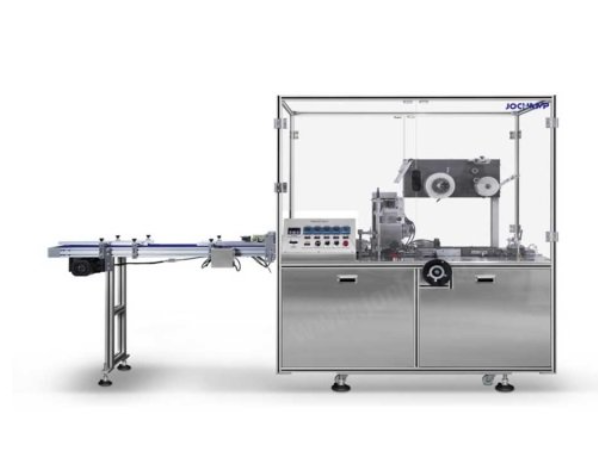
For businesses currently relying on manual or semi-automatic packaging processes, deciding when to invest in an automatic cellophane overwrapping machine is an important strategic decision. While automation offers clear efficiency advantages, understanding the specific signals that indicate it’s time to upgrade , and how different industries have successfully made this transition , helps businesses time this investment appropriately.
This article explores the common triggers that lead businesses to invest in automatic overwrapping equipment and how different industries have applied this technology to solve specific operational challenges.
Signs It May Be Time to Upgrade
Several common operational indicators suggest a business may benefit from transitioning to automatic overwrapping equipment:
Production Volume Exceeding Manual Capacity
As production volume grows, manual or semi-automatic wrapping processes can become a bottleneck limiting overall output, even when other parts of the production process have capacity to handle greater volume.
Rising Labor Costs or Availability Challenges
Businesses facing increasing labor costs or difficulty maintaining consistent staffing for repetitive manual packaging tasks often find that automation provides a more sustainable long-term solution.
Inconsistent Wrapping Quality
When manual processes result in variable wrapping quality , affecting product presentation or protection , automated systems can provide the consistency needed to maintain quality standards at scale.
Need for Faster Time-to-Market
Businesses facing competitive pressure to bring products to market more quickly may find that automated packaging processes help reduce overall production cycle times compared to slower manual alternatives.
Industry-Specific Applications and Upgrade Motivations
Confectionery Manufacturing
Confectionery producers often transition to automatic overwrapping as production volumes scale beyond what manual processes can efficiently handle, particularly for standardized products like boxed chocolates or candy bars where consistent, high-speed wrapping directly supports overall production capacity.
Cosmetics and Personal Care Production
Cosmetics manufacturers frequently invest in automatic overwrapping to support both higher production volumes and the consistent, premium presentation quality that helps maintain brand positioning across large production runs.
Pharmaceutical Packaging
Pharmaceutical manufacturers often prioritize automatic overwrapping for the consistency and reduced manual handling it provides, supporting both regulatory compliance requirements and quality assurance standards that can be more challenging to maintain with manual processes.
Contract Packaging Operations
Contract packagers serving multiple clients across different product categories often invest in flexible automatic overwrapping equipment to efficiently serve diverse client needs while maintaining competitive production costs through automation-driven efficiency.
Industry Application Comparison
The table below summarizes common upgrade motivations across different industry applications.
| Industry | Primary Upgrade Motivation | Key Benefit Realized |
| Confectionery | Scaling beyond manual capacity | Higher throughput, consistent presentation |
| Cosmetics/Personal Care | Maintaining premium brand presentation at scale | Consistency, reduced labor dependency |
| Pharmaceuticals | Regulatory compliance and quality assurance | Reduced manual handling, consistency |
| Contract Packaging | Serving diverse client volume needs efficiently | Flexibility combined with automation efficiency |
| Specialty/Gift Retail | Supporting seasonal volume spikes | Scalable capacity during peak demand periods |
This comparison illustrates how different industries approach the automation upgrade decision based on their specific operational pressures and priorities.
Calculating the Right Time to Upgrade
Rather than upgrading reactively once bottlenecks become severe, many businesses benefit from proactively monitoring key operational indicators that signal an approaching need for automation investment. This includes tracking production volume trends relative to current manual capacity, monitoring labor costs associated with current wrapping processes, and assessing quality consistency metrics that might indicate manual process limitations.
Building this kind of proactive monitoring into regular operational reviews helps businesses time their automation investment before production constraints significantly impact overall business performance.
Managing the Transition from Manual to Automatic Systems
Successfully transitioning from manual or semi-automatic processes to full automation requires careful planning beyond simply purchasing new equipment. Businesses should consider factors such as staff retraining requirements, potential temporary production capacity adjustments during implementation and commissioning, and how the new automated process will integrate with existing upstream and downstream production steps.
Working with experienced equipment suppliers who provide thorough implementation support helps minimize disruption during this transition period.
Common Concerns When Considering the Upgrade
Businesses considering the transition to automatic overwrapping equipment often have specific concerns worth addressing directly:
Concern: Will automation reduce flexibility for product variety? Modern automatic systems increasingly offer flexible changeover capabilities, though businesses with highly variable product lines should specifically evaluate changeover time and complexity when selecting equipment.
Concern: What happens to current wrapping staff? Many businesses find that staff previously performing manual wrapping tasks can be retrained for equipment operation, quality control, or other value-added roles within the broader production process.
Concern: Is the upfront investment justified for our volume? This depends heavily on specific production volume and labor cost factors, making a detailed ROI analysis an important step before committing to the investment.
Final Thoughts
Deciding when to upgrade to an automatic cellophane overwrapping machine depends on a combination of production volume trends, labor cost considerations, and quality consistency requirements specific to each business’s situation. By understanding common upgrade triggers and how similar businesses in various industries have successfully navigated this transition, companies can make more confident, well-timed automation investment decisions.
Partnering with an experienced supplier of automatic cellophane overwrapping machine equipment, one familiar with the specific operational challenges across different industries, provides valuable guidance for businesses navigating this important packaging automation decision.