Every time you unlock your phone with a glance, board a flight without showing a boarding pass, or open a bank account without visiting a branch, face verification is doing the work behind the scenes. It’s quietly become one of the most important technologies in digital identity — and for businesses dealing with fraud, compliance, and remote onboarding, it’s no longer optional.
Defining Face Verification
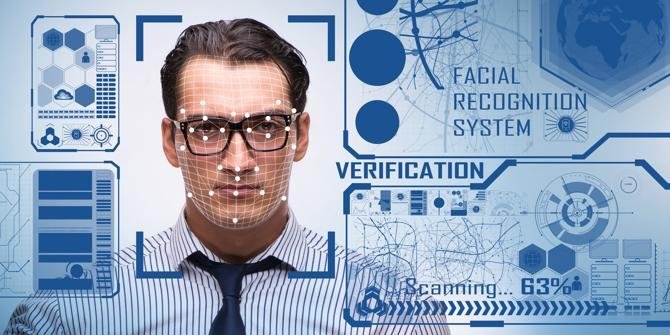
Face verification is a biometric process that confirms whether the person in front of a camera is who they claim to be. It’s a one-to-one match: the system compares a live facial image against a reference — typically a photo from a government-issued ID or a previously stored biometric template — and returns a match or no-match result.
This is different from face recognition, which is a one-to-many search: scanning a face against a large database to identify an unknown individual. Face verification doesn’t try to identify you from scratch. It just confirms you are who you say you are.
That distinction matters. Verification is built for access and onboarding. Recognition is built for surveillance. The two are often conflated, but they serve very different purposes.
How Face Verification Works
Modern face verification software runs through several steps, most of them invisible to the end user:
Face Detection — The system first locates the face within an image or video frame. It identifies facial boundaries and confirms a face is actually present before any matching begins.
Preprocessing — The detected face is normalized: adjusted for lighting, angle, and resolution. This step ensures the comparison is fair regardless of device quality or environment.
Feature Extraction — An AI model analyzes the face and converts it into a mathematical representation called a facial embedding — a numerical vector that captures the unique geometry of facial features like the distance between eyes, jaw shape, and nose structure. No actual image is stored; just the numbers.
Matching — The generated embedding is compared to the reference embedding. A similarity score is calculated. If it exceeds the confidence threshold, the verification passes.
Liveness Detection — This is where modern systems separate themselves. Liveness checks confirm the user is a real, physically present person — not a photo, a printed mask, or a deepfake video. Active liveness asks the user to blink, turn their head, or smile. Passive liveness analyzes subtle texture and depth cues without requiring any action. For high-stakes use cases, passive liveness has become the gold standard.
The entire process typically completes in under three seconds.
Why Face Verification Matters
The shift to remote everything — remote work, remote banking, remote onboarding — has created a massive identity verification gap. Passwords get stolen. Document checks get forged. Knowledge-based questions get bypassed with publicly available data. Face verification closes that gap by anchoring identity to something that can’t easily be transferred, replicated, or phished: your face.
For regulated industries, the stakes are even higher. eKYC and AML (Anti-Money Laundering) regulations require businesses to verify customer identities before onboarding. Face verification provides the biometric layer that makes that process fast, remote, and defensible. A user scans their ID, takes a selfie, and the system confirms the selfie matches the ID photo — in real time, at scale, without a human reviewer in the loop.
Fraud is the other driving force. Synthetic identity fraud — where criminals fabricate identities using real and fake data combined — has surged globally. Face verification, particularly when paired with document verification and liveness detection, makes synthetic identities significantly harder to pass. There’s no real face behind a fabricated identity.
Where It’s Being Used
Face verification has spread well beyond fintech. Banks and neobanks use it at account opening. Crypto exchanges use it for regulatory compliance. Healthcare platforms use it to protect patient records. HR platforms use it for remote employee onboarding and exam proctoring. Border control agencies use it at e-gates to speed up passenger processing. Anywhere that identity matters — and the stakes of getting it wrong are high — face verification is finding a role.
Read Also: Face Liveness Detection: The Technology That Proves You Are Really You
The Compliance Angle
Regulators are increasingly recognizing biometric verification as a valid and preferred method of identity confirmation. The EU’s eIDAS 2.0 framework, FATF guidance on digital identity, and emerging regulations across Southeast Asia and the Middle East all point toward face-based verification as a core element of compliant digital onboarding. For businesses operating across borders, using a face verification solution that meets these standards isn’t just smart — it’s increasingly required.
The Bottom Line
Face verification isn’t a futuristic concept. It’s live, it’s fast, and it’s already embedded in the products millions of people use every day. For businesses, the question isn’t whether to adopt it — it’s whether your current implementation is accurate, fraud-resistant, compliant, and frictionless enough to meet the moment.