Why Traditional Training Is No Longer Enough
Training employees has always been a challenge. Traditional classroom sessions take time, cost money, and often fail to keep learners engaged. In many industries, workers need to practice real scenarios before they face them on the job. But recreating those scenarios in real life is expensive and sometimes impossible.
This is where virtual reality steps in as a game-changer. With immersive VR technology, businesses can now put their teams inside realistic simulations without leaving the office. Mazer is one of the platforms leading this shift, helping companies design, manage, and deliver virtual training experiences that truly stick. In this article, we will explore how this approach works and why more businesses are choosing it to train their people smarter and faster.
A New Era of Workforce Learning Has Arrived
The way companies train their teams has changed dramatically over the past few years. E-learning was a big step forward, but it still relied on screens, slides, and passive watching. Workers could complete a module in minutes without truly absorbing anything. The engagement gap was real, and the results showed it.
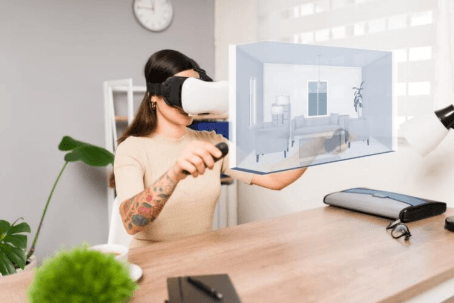
Virtual reality training takes a completely different approach. Instead of watching a video about handling a customer complaint, a trainee can actually practice it inside a virtual environment. They make decisions, face consequences, and learn by doing. Research consistently shows that hands-on practice leads to better skill retention than passive observation. That is the core power of immersive learning.
Building Virtual Training Programs Without Technical Barriers
One of the biggest concerns companies have about VR is the idea that it requires expensive developers or complex technical knowledge to set up. That used to be true. Creating a virtual training experience once meant hiring a full development team and waiting months before a single session could run.
Modern VR training platforms have changed this completely. With Mazer, trainers and HR professionals can build and customize virtual spaces without writing a single line of code. The platform is designed with non-technical users in mind, which means the focus stays on the quality of the training itself rather than the complexity of the tools. This is what makes it truly accessible for businesses of all sizes.
Key Features That Make Virtual Training More Effective
Not all VR training platforms are built equally. The best ones combine flexibility, ease of use, and real learning outcomes. Here are some of the features that set a high-quality virtual training platform apart from the rest:
- Multiuser spaces: Multiple trainees can join the same virtual environment at the same time, making group exercises and team simulations possible.
- 360-degree environments: Learners are fully surrounded by the virtual scene, which increases focus and creates a stronger sense of presence.
- Mobile compatibility: Trainers can run and test sessions directly from a smartphone, removing the need for dedicated equipment at every step.
- Custom branding: Companies can add their own logos, colors, and visual identity to the virtual space to keep training on-brand.
- Completion certificates: Learners receive digital certificates upon finishing modules, which adds credibility and motivates engagement.
Each of these features serves a clear purpose. They make it easier for trainers to set up sessions and for learners to stay engaged from start to finish. When the experience feels real and purposeful, people pay more attention and remember more of what they learn.
Industries That Benefit Most from Immersive Learning
Virtual reality training is not limited to one type of business. Its flexibility makes it useful across a wide range of industries. Some sectors, however, have found it especially powerful because of the nature of the skills their teams need to develop.
- Healthcare: Medical staff can practice procedures, patient communication, and emergency responses in a safe and controlled virtual space.
- Manufacturing and production: Workers learn how to operate complex machinery or follow safety protocols without touching the actual equipment until they are ready.
- Sales and customer service: Teams can rehearse difficult conversations, negotiations, and client interactions inside realistic virtual scenarios.
- Education: Schools and universities use immersive learning to make lessons more engaging and to give students access to experiences that would otherwise be impossible to recreate.
- Corporate onboarding: New hires can explore the company environment, meet virtual colleagues, and learn about processes before their first real day on the floor.
The common thread across all of these is the need for practice in realistic situations. VR delivers that at a fraction of the cost of real-world simulations. And with a platform like Mazer, companies do not need to build separate solutions for each department. One platform can serve the entire organization.
Scaling Training Across Teams and Locations
One of the most powerful advantages of virtual reality training is how easily it scales. A company with offices in five different countries used to face a massive logistical challenge every time it needed to train its workforce. Flights, hotels, printed materials, and scheduled sessions added up quickly in both time and cost.
With a cloud-based VR platform, every employee regardless of location can access the same training module at the same time. Updates to the training content happen instantly across all users. There is no need to reprint materials or fly in a trainer. The experience is consistent, measurable, and available on demand. Mazer was built with this global scalability in mind, offering unlimited monthly users at a fixed price so that growth never becomes a cost problem.
How to Know If Your Business Is Ready for This Shift
Many businesses are curious about VR training but are not sure if they are ready to take the leap. The good news is that getting started does not require a huge upfront investment or a dedicated tech team. Most modern VR training platforms offer free trials or demo sessions so that decision-makers can experience the technology before committing.
Ask yourself a few simple questions. Does your current training leave employees feeling unprepared? Are you spending too much on instructor-led sessions that need to be repeated often? Do you have team members in different locations who need consistent learning experiences? If the answer to any of these is yes, virtual reality training is likely a strong fit for your organization.
See also: Face Liveness Detection: The Technology That Proves You Are Really You
The Future of Learning Is Already Here
Virtual reality training is no longer a futuristic idea. It is a practical, proven solution that businesses around the world are already using to save time, cut costs, and produce better-trained employees. The technology has matured to the point where anyone with a headset and a good platform can launch a high-quality training program in days, not months.
Mazer makes this even more accessible by removing the technical barriers that once held companies back. Whether you are a small business looking to onboard new hires more efficiently or a large enterprise needing to train thousands of employees across the globe, this platform gives you the tools to do it well.
The shift to immersive learning is not just a trend. It is a smarter, more human way to help people grow. If your organization is ready to move beyond outdated training methods, now is the perfect time to explore what virtual reality can do for your team. Start small, measure the results, and let the outcomes speak for themselves.