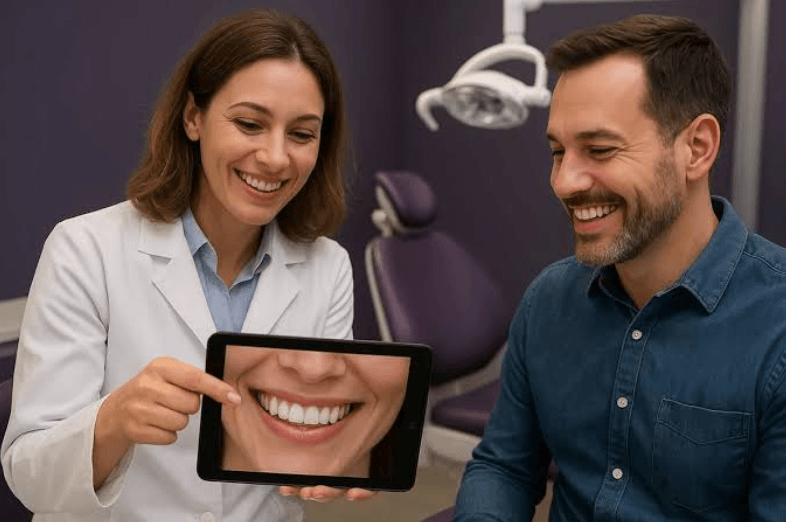
You may have started with something small, a chipped tooth in a photo, a dark spot near an old filling, a smile you hide without thinking about it. Then it gets harder to ignore. You chew on one side. Cold drinks sting. You smile with your lips closed. That mix of discomfort and self-consciousness wears on you because it affects more than your teeth. At Tribeca Smiles in Lower Manhattan, we understand how deeply that can affect daily life. It changes how you eat, speak, and show up around other people.
That is usually the point where appearance and function stop being separate issues. A tooth can look worn because it is weak. A gap that bothers you may also change your bite. Stains can be harmless, but discoloration around a filling or crown can point to damage underneath. If your smile needs support and you want it to look better too, a cosmetic and restorative dentist can often address both at the same time.
A damaged smile often needs cosmetic and restorative treatment together
Many people assume cosmetic care is optional and restorative care is the serious part. In real life, they overlap all the time. Restorative work repairs teeth that are decayed, cracked, missing, or worn down. Cosmetic care improves color, shape, balance, and overall appearance. When a treatment plan is done well, it protects your oral health and helps your smile look natural again.
4 signs it’s time to seek both cosmetic and restorative care often show up gradually, which is why people put them off. You adjust. You avoid crunchy foods. You stop showing your teeth in pictures. You tell yourself it is only cosmetic, or only a minor cavity, when it is really both.
Pain, sensitivity, or recurring discomfort points to deeper tooth damage
If a tooth hurts when you bite down, reacts to heat or cold, or throbs on and off, the problem is not only cosmetic. Sensitivity can come from decay, exposed roots, worn enamel, or a crack. According to MedlinePlus information on tooth decay, decay can destroy enamel and spread deeper into the tooth if it is not treated. That is when a simple fix can turn into a larger one.
You might also notice that the tooth looks darker, shorter, or rough at the edge. That is where combined care matters. A crown, bonding, or onlay may restore strength and also improve shape and color. Ignoring pain because you are focused on how the tooth looks often leads to more damage, and focusing only on function can leave you with a result that feels repaired but not fully like your smile.
Chips, cracks, and worn teeth affect both appearance and bite
A chipped front tooth is easy to dismiss if it does not hurt. A worn molar can seem less urgent because nobody sees it. Both can change how your teeth meet. Once your bite shifts, pressure spreads unevenly, and other teeth start doing extra work. That can mean jaw soreness, more chipping, and faster wear.
This is one of the clearest signs you need cosmetic and restorative dentistry. The visible damage is only part of the story. Repairing the tooth with bonding, veneers, crowns, or other treatment may help you chew comfortably again and prevent stress on nearby teeth. A skilled provider looks at symmetry, bite balance, and long term durability, not just the obvious flaw.
Missing teeth and failing dental work create larger problems over time
If you have a missing tooth, a loose crown, old fillings that keep breaking, or spaces opening around past dental work, your mouth is already compensating. Teeth can drift. Food traps become more common. Cleaning gets harder. You may be embarrassed by the look of the area, but the health side usually worsens faster than people expect.
The CDC explains in its overview of oral health that oral conditions affect eating, speaking, and quality of life. That is the daily reality for people dealing with missing or unstable teeth. Restoring those areas with bridges, implants, crowns, or replacement fillings can bring back structure, while cosmetic planning helps the final result blend with your natural smile.
Staining, uneven teeth, and gum changes can signal more than a cosmetic issue
Not every stain means decay, and not every uneven tooth is unhealthy. Still, visible changes deserve a closer look when they appear with sensitivity, bleeding gums, rough edges, or bad breath that does not go away. A tooth that suddenly looks gray may have suffered trauma. Dark lines near a filling may point to leakage. Gums that recede can make teeth look longer while exposing vulnerable root surfaces.
This is where cosmetic restorative dental care makes sense. You are not choosing between health and appearance. You are dealing with both. A treatment plan may include gum care, replacement of failing restorations, whitening after repairs, or reshaping teeth once the underlying problem is controlled.
Professional treatment protects more than appearance
| Concern | Common short term fix | What professional care addresses |
| Chipped or uneven tooth | Avoid smiling, chew carefully | Repairs structure, restores shape, checks for bite stress |
| Tooth discoloration with sensitivity | Whitening products at home | Rules out decay, cracks, or nerve damage before improving color |
| Missing tooth | Chew on the other side | Prevents shifting, supports bite, restores appearance |
| Old filling or crown keeps failing | Wait until it breaks again | Rebuilds strength, improves fit, blends with surrounding teeth |
People often try to separate urgent treatment from aesthetic concerns because they worry about cost. That is understandable. The problem is that patchwork fixes can add up when the full cause is not addressed. Treating function and appearance together can reduce repeat work and give you a result that feels stable, comfortable, and worth maintaining.
See also: Minimally Invasive Medical Center Providing Precision Healthcare Services
Small steps now can prevent larger dental work later
Pay attention to patterns. One sore tooth after ice cream may not mean much. Repeated sensitivity, a bite that feels off, or a tooth you keep avoiding is a pattern. Write down what you notice, including when it happens and whether it is getting worse.
Take clear photos of visible changes. If a tooth is chipping, darkening, or shifting, photos help you see progress that is easy to miss day to day. They also make it easier to explain what has changed since your last exam.
Schedule an evaluation before the problem becomes urgent. A consultation with a cosmetic and restorative dentist can tell you whether the issue is mainly structural, mainly aesthetic, or both. That clarity matters because it gives you options while the treatment is often simpler.
The right dental care should help you feel comfortable and confident again
If you have been putting this off, you are not alone. Many people wait because they are unsure whether the problem is serious enough, or they assume they have to choose between a healthy mouth and a smile they feel good about. You do not. The right plan can protect your teeth and help your smile look like you again. If these signs sound familiar, schedule a visit with a cosmetic and restorative dentist and get a clear path forward.