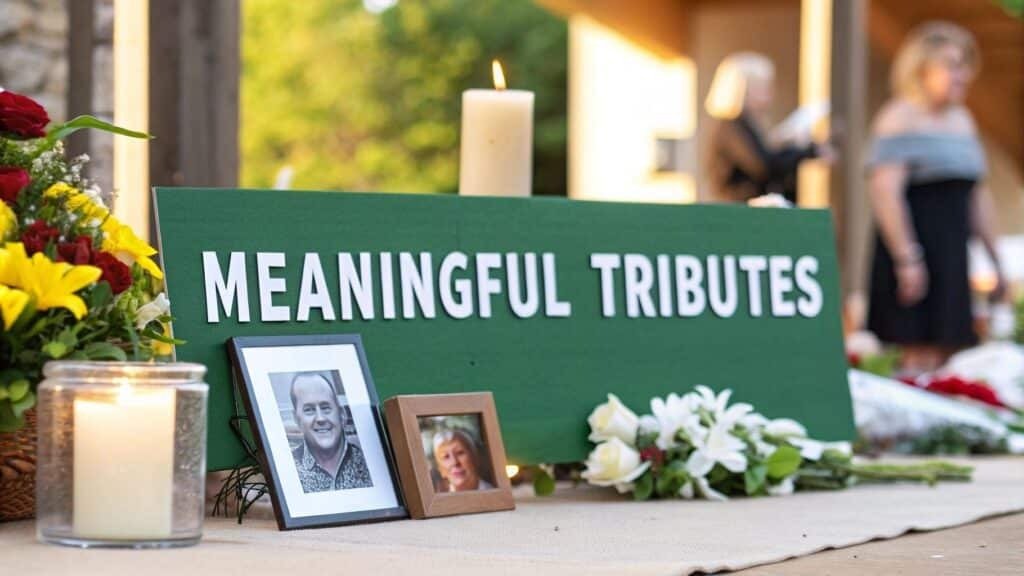
Meaning is not measured by the final bill
Memorial planning often happens when families are tired, emotional, and working against a deadline. That combination can make every upgrade feel important and every lower-cost choice feel inadequate. Yet the elements people remember most are usually personal: a story shared by a friend, a song that belonged to the family, a favorite photograph, or the feeling of being welcomed and supported.
A thoughtful budget does not diminish respect. It protects the family from financial stress while making room for the parts of the gathering that truly matter. The practical goal is not to make every choice as cheap as possible. It is to spend intentionally, understand what is required, and avoid paying for features that do not serve the family’s values or plans.
Set the total before choosing individual items
Start with one realistic maximum that includes the service, cremation-related charges, memorial venue, transportation, flowers, printed materials, food, obituary costs, keepsakes, and the final resting arrangement. Families sometimes compare only the headline price of a service package and discover later that permits, delivery, personalization, or facility fees are separate. Ask providers for itemized estimates and keep them in one worksheet.
Divide expenses into three groups: required, meaningful, and optional. Required costs are those connected to legal disposition and the selected provider. Meaningful costs support the family’s core wishes, such as a particular venue or livestream for distant relatives. Optional costs may be attractive but replaceable. This simple classification makes tradeoffs easier when several people are making decisions together.
Choose the format before the merchandise
The structure of the memorial should guide what the family buys. A direct cremation followed by a gathering at home has different needs from a formal chapel service with the vessel displayed. A future scattering ceremony may call for a secure temporary container and a biodegradable scattering vessel later. Interment in a cemetery niche requires exact dimensions and may involve placement fees.
Writing the plan in a few sentences helps prevent mismatched purchases: where the gathering will happen, who will attend, whether ashes will be present, and what will happen afterward. Once those decisions are clear, decorations, printed pieces, flowers, and memorial products can be evaluated by whether they support that plan.
Compare value, not just sticker price
Two products with similar photographs may differ in material, construction, capacity, closure, engraving, and delivery time. A low price is not useful if the vessel is too small, arrives after the service, or cannot be returned. A premium finish may not add value if the ashes will soon be scattered. Compare the complete delivered cost and the features the family will actually use.
When researching cremation urns, check capacity, exterior dimensions, material, lid or closure design, personalization charges, shipping, and return terms. Ask whether a proof is supplied for engraving and whether customization changes the delivery date. If the vessel will enter a columbarium, confirm the niche’s interior measurements before ordering rather than relying on a general label such as ‘adult size.’
Use personalization selectively
Personalization can be powerful without being extensive. A printed photo board made by relatives, a playlist assembled from the person’s favorites, or handwritten memory cards may carry more emotional weight than multiple commercial upgrades. Choose one focal object or experience, then keep supporting elements simple. A single framed portrait with seasonal flowers can be more coherent than several unrelated decorative packages.
The same principle applies to engraving. A name, dates, and a concise line often provide all the permanence a family needs. Longer poems and stories can live in a memorial booklet or online page where there is room to read them. Separating the permanent inscription from the fuller life story also reduces the pressure to find perfect words during the first days of grief.
Consider flexible venues and timing
A memorial does not always need to occur immediately or in a traditional facility. Delaying the gathering can allow distant relatives to travel, give the family time to plan, and open access to lower-cost community rooms, faith spaces, parks, restaurants, or homes. The right choice depends on attendance, accessibility, weather, sound, seating, food rules, and local permits.
If the venue supplies tables, audio equipment, parking, or cleanup, include those savings in the comparison. A seemingly inexpensive empty room can become costly after rentals and staffing. Conversely, a family home may be appropriate for a small gathering but stressful if hosts must manage parking, food, and cleaning while grieving. Value includes effort as well as money.
Simplify flowers, food, and printed materials
Flowers create warmth, but a few purposeful arrangements can be enough. Families can display plants from the person’s garden, seasonal branches, or flowers donated afterward to a care facility where accepted. For food, focus on easy service and familiar comfort rather than a complex menu. A potluck may work for a close community if it does not place coordination duties on the immediate family.
Printed programs are useful when they guide the ceremony or become keepsakes. For a casual event, a welcome sign and digital order of service may be sufficient. If printing, confirm the final page count, paper size, color charges, and quantity before production. Small revisions after printing can create waste, so designate one person to approve names, dates, and the sequence.
Ask for help in concrete ways
People often say, ‘Let me know what I can do,’ because they genuinely want to help. Turn that goodwill into specific tasks: collect photographs, build a playlist, coordinate rides, bring folding chairs, manage the guest book, or pick up food. Delegation lowers costs and reduces the number of decisions resting on one exhausted person.
Keep financial help transparent. If relatives contribute, record who is paying for which item and whether the money is a gift or expected to be repaid. Crowdfunding may be appropriate, but the page should state how funds will be used and who controls them. Clear communication prevents misunderstandings after the gathering.
Protect against rushed and duplicate purchases
Before ordering, appoint one decision-maker or a small group with defined roles. Shared lists prevent two relatives from buying the same flowers, frames, or keepsakes. Review cancellation and return policies, especially for personalized products. Save receipts and written confirmations until every item arrives and the service is complete.
Pressure is a warning sign. Families should be able to ask for an itemized price, take time to compare, and decline options that do not fit. If a decision is not time-sensitive, postpone it. Ashes can remain securely in the provider’s temporary container while the family considers a permanent memorial, cemetery placement, or scattering plan.
Plan for the expenses that come after the gathering
The service is not always the final cost. Families may later pay for niche placement, cemetery opening and closing, transportation, a marker, additional death certificates, shipping ashes to a relative, or travel for a scattering ceremony. Ask which future expenses are likely under the chosen plan and reserve part of the budget rather than spending everything on the first event.
Ownership and long-term responsibility should also be discussed. Record who will keep the ashes, documents, photographs, and memorial items; whether relatives may request keepsake portions; and what should happen if the custodian moves or dies. These conversations may feel premature, but a written plan prevents future costs and disagreements from falling on someone who was never consulted.
See also: Exploring Bundoora Lifestyle Community: What Residents Can Expect
A budget can support a better tribute
Constraints often help families identify what is essential. When the purpose of the gathering is clear, money can be directed toward accessibility, hospitality, and the details that tell a true story. A modest memorial with thoughtful participation can feel more personal than an expensive event shaped by default packages.
The final measure is not how many products were purchased. It is whether people had a place to gather, remember, and support one another, and whether the family can move forward without avoidable financial strain. Planning with a budget is therefore not only a financial exercise; it is a form of care for everyone who remains.