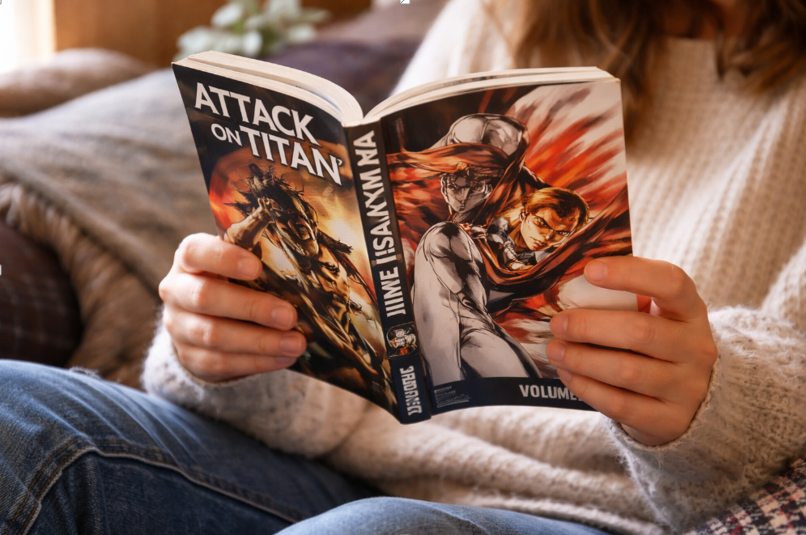
Imagine a world where humanity is caged behind walls, preyed upon by monstrous giants, and forced to watch loved ones vanish in a blink. That’s the everyday reality within the pages of Attack on Titan, a manga that doesn’t just flirt with violence it dances with it, unflinchingly. But is it too much? Is the level of brutality justified, or has it crossed into the realm of gratuitous gore? In this article, we’ll unpack the nature of violence in Attack on Titan, not with moral panic or sugar-coated language, but with clarity, context, and respect for its audience. Whether you’re a parent, a curious reader, or simply someone wondering what all the fuss is about this breakdown will help you decide if this manga’s level of intensity is suitable for you or those you care about. Let’s dive into the raw truth behind one of the most talked-about aspects of Attack on Titan its violence.
What kind of violence can you expect in Attack on Titan?
The violence in Attack on Titan is not subtle. It’s immediate, impactful and deeply entwined with the story’s themes. Right from the opening chapters, readers are exposed to shocking imagery: a mother crushed beneath rubble, humans eaten alive by grotesque giants, soldiers torn apart mid-air. These scenes are graphic but they’re also meaningful. The brutality serves a purpose. It reflects the sheer horror of a world ruled by fear and survival. This isn’t violence for the sake of spectacle; it’s the narrative mechanism that shows how fragile and desperate life has become behind the walls.
If you’re browsing for Attack on Titan figures, you’ll often find these intense moments immortalised in collectible form from Titan transformations to iconic death scenes. That tells you a lot: the violence isn’t just present; it’s iconic. Of course, that doesn’t mean it’s easy to digest. The visuals include:
- Blood splatter during combat
- Dismembered corpses
- Close-ups of characters being devoured
- Screams of agony and mental breakdowns
- Trauma-induced flashbacks
For some, especially younger audiences, these scenes may be overwhelming. Attack on Titan doesn’t flinch. It shows the consequences of war, fear, and hatred without a filter. That’s why many readers describe it as both captivating and emotionally draining.
Does the violence serve the story or go too far?
When critics and fans debate whether Attack on Titan is too violent, the answer often depends on perspective. From a narrative standpoint, the violence is consistent with the tone of the world Isayama has created. It’s a universe where peace is a fantasy and loss is a constant companion. In such a setting, bloodshed becomes not only expected but necessary to tell the truth of this dystopia. Yet there are moments that feel deliberately discomforting. Scenes like the gruesome demise of certain key characters aren’t just graphic they’re slow, emotional, and intense. In these moments, the manga almost forces the reader to feel helpless a calculated emotional hit that mimics the trauma of the characters.
This creates a psychological impact not unlike horror. The tension isn’t always from the gore itself but from the looming threat of what’s coming next. Interestingly, even retailers like anime figures shop lean into this darker tone when showcasing their product lines choosing to feature characters mid-battle or soaked in blood, reinforcing that Attack on Titan wears its intensity on its sleeve.
But does it go too far?
That depends on your threshold. If you’re looking for anime or manga that’s light-hearted or safe for children, this isn’t it. The mature rating isn’t an exaggeration it’s a necessity. Attack on Titan often explores:
- Graphic death sequences
- Torture and psychological manipulation
- War crimes and political execution
- Despair, suicide, and sacrifice
These aren’t easy themes, and the manga doesn’t shy away from making the reader feel uncomfortable. It’s not just visual violence, but emotional. And for some, that’s more haunting than gore ever could be.
See also: Find the Right Tablet Insurance for Your Lifestyle
Who is Attack on Titan really for?
This is not a series designed for children or the faint-hearted. While it may feature a cast of teenage protagonists, Attack on Titan is emotionally and visually geared towards a mature audience. Think late teens to adults particularly those who appreciate dark narratives, moral ambiguity, and high emotional stakes. Its UK age rating of 15+ is accurate. Some episodes, chapters, and themes might even push the boundaries of that limit. If you’re considering whether it’s safe for teenagers, the answer is: it depends on the teen.
Understanding the emotional weight
It’s not just the visuals that make Attack on Titan hard to stomach. The characters are constantly burdened with trauma. The series explores grief, revenge, hopelessness, and the erosion of innocence. Eren Yeager starts the manga filled with righteous anger, but as the story unfolds, his motivations darken reflecting the loss of idealism in the face of unrelenting war. Many fans note that watching the emotional descent of characters is as brutal as the physical violence. It’s not just about what you see it’s about what you feel while reading.
Should parents be concerned?
Absolutely but not necessarily in a negative way. Parents should know what their children are consuming. If a younger viewer or reader is interested in the series, it’s essential to assess their emotional maturity, not just their age. Discussing the themes together can turn a potentially traumatising experience into a meaningful one. That said, for many younger readers, Attack on Titan may be better left until they’re older and more equipped to process what the series truly conveys.
What makes the violence feel more intense than other anime?
There are plenty of violent anime out there. So what makes Attack on Titan stand out? It’s the combination of hyper-realism, emotional investment, and existential dread. The deaths aren’t random cannon fodder. Each loss carries a name, a backstory, a purpose. The artwork is gritty, the pacing relentless, and the stakes impossibly high. In many anime, violence is stylised even beautiful. But in Attack on Titan, it’s messy. Unforgiving. Realistic. You’ll see characters cry, break down, beg, scream, and lose everything. And the manga shows it all, in painful detail.
Other contributing factors
- The lack of plot armour no one is safe
- The psychological horror of not knowing who to trust
- The symbolism of being trapped physically and mentally
- The militaristic world-building that glorifies sacrifice
This layered approach is why even seasoned manga readers often describe Attack on Titan as emotionally taxing. You’re not just witnessing death. You’re feeling the cost of it. And that’s where the real impact lies.
Why the violence in Attack on Titan leaves a lasting impression
There’s no denying the raw, unfiltered brutality of Attack on Titan. But unlike many series that use violence as cheap shock value, here it feels deliberate a mirror to the horrors of war, a reminder of what humanity can become when backed into a corner. Whether you find it powerful or overwhelming, one thing is certain Attack on Titan doesn’t want you to walk away untouched. And in a landscape filled with sanitised, formulaic storytelling, that may be what makes it unforgettable. Have you read Attack on Titan? How did the violence impact you as a reader? Let us know your thoughts might just help someone else decide if this world of Titans is for them.