Steep slopes and vulnerable terrain present ongoing erosion challenges that simple vegetation or basic ground cover often can’t adequately address on their own, making geocell erosion control an increasingly common solution for civil engineering and landscaping projects facing these demanding conditions.
Understanding the Basic Structure
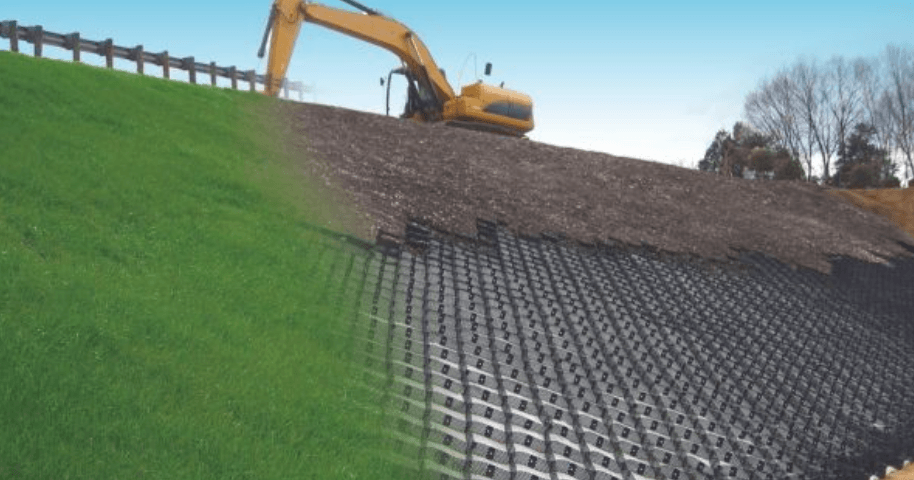
Geocells consist of a three-dimensional honeycomb-like cellular structure, typically made from durable polymer materials, that’s filled with soil, gravel, or vegetation to create a stabilized, confined system resistant to the erosive forces that would otherwise gradually wash away unprotected slope surfaces.
Why Cellular Confinement Works So Effectively
The key mechanism behind geocell erosion control involves confining the fill material within individual cells, preventing the lateral movement that allows water to gradually carry away soil on unprotected slopes. This confinement effect significantly increases the fill material’s resistance to erosive water flow compared to unconfined soil alone.
Common Applications Beyond Basic Slopes
While steep slope stabilization represents the most common application, geocell erosion control systems also see use in channel linings, shoreline protection, and various infrastructure applications where soil stability under water flow or mechanical stress represents an ongoing engineering challenge.
Comparing Geocells to Alternative Erosion Solutions
Compared to simpler erosion control blankets or basic vegetation alone, geocells generally offer superior performance on steeper slopes or in situations involving more significant water flow, though this enhanced performance typically comes with correspondingly higher installation cost and complexity.
Material and Durability Considerations
Quality geocell products use UV-stabilized polymer materials specifically engineered to withstand long-term outdoor exposure without degrading, an important consideration given that these systems are typically expected to provide erosion protection for many years after installation.
For engineers and contractors researching this solution, more detailed information is available through this resource on geocell erosion control applications for challenging terrain.
Vegetation Integration for Long-Term Stability
Many geocell erosion control applications incorporate vegetation growth within the cells over time, combining the immediate structural stability the geocell provides with the additional long-term erosion resistance that established root systems eventually contribute to the overall system.
Planning for Proper Installation
Achieving genuine erosion control performance depends heavily on proper installation technique, including appropriate anchoring to the underlying slope and correct fill material selection matched to the specific project’s soil conditions and expected water flow patterns.
Final Thoughts
Geocell erosion control offers a genuinely robust solution for challenging terrain where simpler erosion control methods prove inadequate, combining structural confinement with the potential for long-term vegetation establishment to create durable, effective slope protection.
See also: How F&B License Singapore Requirements Have Evolved for Modern Food Businesses
Frequently Asked Questions
How do geocells compare to erosion control blankets for steep slopes?
Geocells generally offer superior performance on steeper terrain or higher water flow situations, though typically at greater installation cost and complexity than simpler blankets.
Can vegetation grow successfully within geocell systems?
Yes, many applications specifically incorporate vegetation growth over time, combining structural and biological erosion resistance for long-term stability.
How long do quality geocell systems typically last?
This varies by specific product and conditions, but UV-stabilized materials are generally engineered for long-term outdoor performance spanning many years.