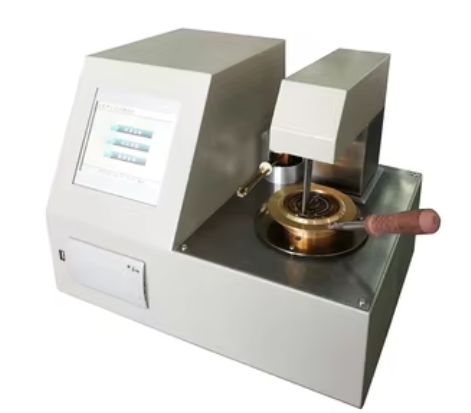
When laboratories plan equipment purchases, cost naturally becomes part of the discussion. However, evaluating flash point tester price without considering test methods, sample requirements, safety features, operating workload, and long-term usability can lead to an unsuitable decision. The right approach is to compare overall testing requirements first and then determine which equipment configuration provides appropriate value.
What Influences Flash Point Tester Price?
Flash point instruments are designed for different methods and applications. Consequently, equipment configurations can vary considerably.
Factors affecting flash point tester price may include test method compatibility, temperature control, automation, ignition systems, measurement features, safety functions, data handling, and construction.
A simple comparison based only on acquisition cost may therefore overlook important differences.
Test Method Compatibility Comes First
Before considering equipment cost, laboratories should identify the test procedure they need to perform.
Different samples and testing standards may require different apparatus configurations. Purchasing equipment that does not support the required method can create additional expense later.
Method compatibility should therefore be one of the first criteria used when assessing flash point tester price.
Manual and Automated Operation
The degree of automation can influence equipment selection. Manual systems may require greater operator involvement, while automated instruments can control more stages of the test.
Automation may help improve consistency when laboratories process numerous samples. However, the appropriate level depends on workload, personnel, and procedural requirements.
Rather than assuming more automation is always better, laboratories should determine which functions genuinely improve their workflow.
Consider the Entire Operating Environment
Flash point testing involves elevated temperatures and potential ignition sources. The laboratory environment should therefore be considered alongside equipment specifications.
Ventilation, available workspace, electrical requirements, operator procedures, and sample handling practices can all influence implementation.
When comparing flash point tester price, decision-makers should consider whether additional facility changes or accessories will be required.
Safety Features Have Practical Value
Safety should never be treated merely as an optional feature. Depending on the equipment and method, useful design elements may help technicians manage heating, ignition, and test termination more consistently.
Laboratories should evaluate safety-related capabilities in relation to their established procedures and risk assessments.
Long-Term Costs Matter
Acquisition cost is only one component of ownership. Consumables, maintenance, calibration, verification, cleaning, replacement components, and operator time can all contribute to long-term expenditure.
A lower initial flash point tester price does not necessarily mean a lower overall operating cost.
Equipment that fits the laboratory’s workflow and can be maintained efficiently may provide stronger value over its working life.
Workload Can Change the Calculation
A laboratory performing occasional tests has different requirements from one processing samples every day.
For higher testing volumes, features that reduce manual intervention or simplify cleaning may produce meaningful efficiency benefits. For lower volumes, a simpler configuration may be sufficient.
Matching capability to workload helps avoid both underinvestment and unnecessary complexity.
Ask the Right Questions Before Selection
Laboratories should define their requirements clearly before comparing options. What sample types will be tested? Which method is required? What temperature range is expected? How many samples will be processed? What documentation is necessary?
These questions provide useful context when reviewing flash point tester price.
Decision-makers should also consider training needs and whether operators can perform routine verification and maintenance effectively.
Value Means Suitability, Not Simply Low Cost
Equipment creates value when it produces reliable results, supports required methods, fits laboratory workflows, and can be operated safely and consistently.
For this reason, flash point tester price should be evaluated together with functionality and expected lifetime use rather than as an isolated number.
See also: The Benefits of a Pest Control Subscription for Homeowners
Conclusion
Choosing flash point testing equipment requires more than searching for the lowest acquisition cost. Laboratories should assess method compatibility, sample characteristics, workload, automation, safety, maintenance, and long-term operation when evaluating flash point tester price. A requirement-driven comparison helps organizations select equipment that supports dependable testing while delivering practical value throughout its service life.