Introduction:
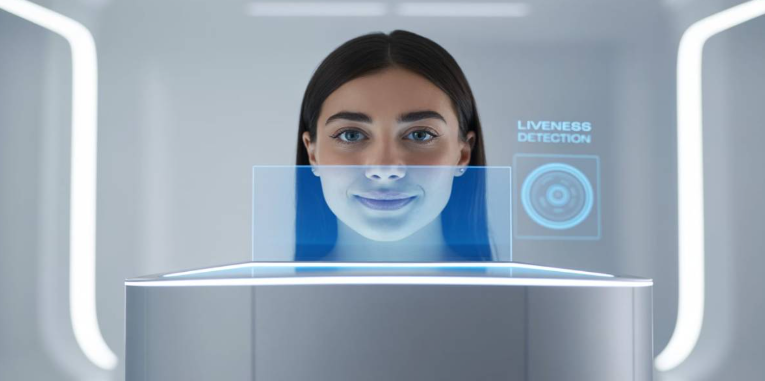
Face liveness detection is a biometric security system, which ensures the authentic presence of a real, live individual during face authentication. In contrast to a simple face recognition that can just compare the faces, liveness detection makes sure that the face being captured is not a photograph, a video, a mask, or a digital image. With the growing popularity of facial authentication in the banking sector, mobile devices, medical services, and border control, liveness detection has become the key to avoiding identity fraud and unauthorized access.
The importance of Face Liveness Detection.
Conventional facial recognition systems can be spoofed with print images, video replay or even with an extremely convincing 3D mask. Facial liveness detection would solve these threats by providing an extra security check. The technology assists organizations to secure sensitive information, meet regulatory obligations and ensure the trust of the users. The lack of liveness detection will also make it easy to break the facial authentication system and suffer financial losses and reputation.
See also: The Future of Language Tech: How AI Is Changing Document Translation
The working principle of Face Liveness Detection.
Face liveness testing is based on the idea that, besides analyzing biological and behavioral features that signal true human presence, it aims at detecting the presence of a human being. The system records facial information with the help of a camera and assesses it on the fly. It can analyze facial movements, skin texture, depth information or light reflection depending on the method applied. The aim is to find the qualities that are not reproduced by the fixed pictures and pre-recorded media.
Active Liveness Detection Techniques.
Active liveness detection involves user participation so as to verify authenticity. The system can require the user to smile, follow instructions on screen, blink, or turn his/her head. Attackers find it hard to imitate these actions with the help of photos or video. Although active approaches are useful, they still have a minor impact on user experience, particularly when various actions are needed. Nonetheless they are still in use in high security areas where precision is paramount.
Passive Liveness Detection Techniques.
Passive Liveness detection does not involve any particular actions by users and hence it is more user friendly and smooth. It examines such minor signs as micro-expressions, blood flow beneath the skin, texture patterns and natural facial movements. There are sophisticated algorithms which evaluate the manner in which the light reacts on the skin and facial features change over time. Passive techniques are becoming increasingly popular in consumer use due to their great security and low friction.
Application of Artificial Intelligence in Liveness Detection.
Face liveness detection involves artificial intelligence. Machine learning models are developed using large quantities of data with both real faces and spoofing. These models are trained to detect patterns that differentiate between both live human faces and fake ones. Deep learning allows systems to evolve to match new ways of attacks, increasing detection accuracy as time passes. The liveness detection based on AI is also able to process information quickly, thus it could be used in real-time authentication.
Widely Used Spoofing Attacks and Mitigation.
Spoofing attacks may be as simple as a printed photo or elaborate 3D masks and deep fake videos. The face liveness detection systems are developed to address these threats by comparing depth, motion as well as texture. As an illustration, 2D attacks are identified by depth analysis, and replays in video are identified by motion or lighting inconsistencies. The liveness detection systems should keep on changing as the methods of spoofing also change.
Use Cases Across Industries
Face liveness detection finds a lot of application in the industries where identity verification is a critical requirement. In the fintech sector, including banking, it helps in the remote customer onboarding and transaction authentication. It secures patient records and guarantees secure access to telemedicine in healthcare. It is employed in government agencies (border control, national ID programs, etc.), as well as enterprises (secure access to buildings and systems). Its flexibility makes it one of the major elements of the contemporary digital identity solutions.
Privacy and Ethical Issues.
Face liveness detection will improve security, but it poses a threat to privacy and is ethically wrong. The companies should make sure that the biometric data should be stored in a secure environment and handled according to the law on data protection. Honesty concerning the collection and use of facial data is essential to keeping the population on board. Ethical implementation will be to ensure that a minimal data retention and liveness detection is applied where it is needed.
The Future of Face Liveness Detection.
The future of active liveness detection consists of the continuous innovation and integration with larger identity verification systems. The sensor technology including the infrared and 3D cameras will enhance accuracy and anti-spoofing. Along with decentralized identity systems and more rigorous control, liveness identification will become essential in ensuring that online communication is kept safe. With the increased prominence of digital identity in our daily lives, face liveness detection will continue to form the basis of the reliable biometric verification.
Conclusion
Face liveness detection is a very important development in biometric security, as it would be ascertained that the facial recognition systems are identifying a real human being and not an artificial one. This technology presents an effective protection of identity frauds by combining intelligent algorithms, sophisticated sensors, and responsible implementation. With the threats becoming increasingly advanced, face liveness detection will keep improving and assisting organizations and individuals to live a secure life online.