Walls take more punishment than most homeowners realize. Furniture bumps, accidental impacts, moisture problems, settling, and everyday wear can leave drywall cracked, dented, or punctured. Although minor imperfections may seem cosmetic at first, damaged drywall can affect the appearance and overall condition of an entire room.
Professional drywall repair Ottawa solutions can restore damaged surfaces and create a smooth foundation for painting or other finishing work. Understanding common drywall problems and how repairs are completed can help homeowners decide when an area needs attention.
Why Drywall Damage Should Be Addressed
Small dents and nail holes are easy to ignore, particularly in rooms that are not used often. However, some types of damage can become more noticeable over time.
Cracks may widen as a building naturally shifts. Loose drywall tape can continue peeling away from a joint, while moisture-related damage may indicate an issue that needs investigation before repairs begin.
Repairing drywall promptly also improves the visual consistency of a room. Even a beautifully painted wall can look unfinished when cracks, holes, or uneven patches remain visible.
Common Causes of Drywall Problems
Drywall can become damaged for many reasons. Accidental impacts are among the most common causes, especially in busy households. Moving furniture, opening doors too forcefully, and installing shelves or wall-mounted items can all leave marks.
Other common causes include building movement, plumbing leaks, roof leaks, excessive humidity, and previous repairs that were not properly finished.
The cause matters because successful drywall repair involves more than covering the visible damage. When moisture or structural movement is involved, the underlying problem should be understood first.
What Does the Drywall Repair Process Involve?
The appropriate repair method depends on the size, location, and type of damage.
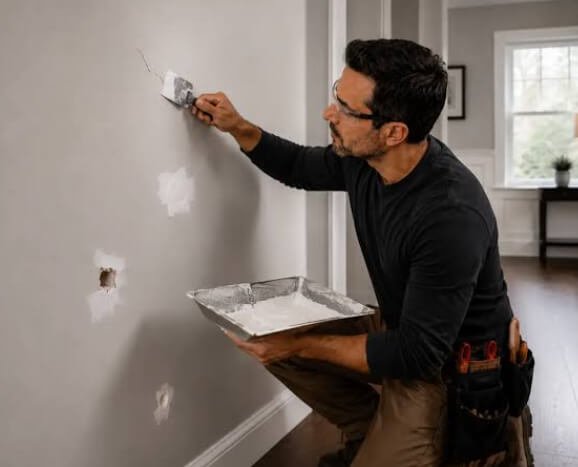
Small holes may require filling, sanding, and surface preparation. Larger holes often need damaged sections removed and replaced with new drywall. Cracks and failing seams may require joint compound and reinforcing tape.
After the repaired area dries, it is carefully sanded to create an even transition between the patch and the surrounding wall.
Matching the Existing Surface
A repair can be technically solid but still look obvious if the texture does not match the surrounding area.
Walls may have smooth finishes, subtle roller textures, or more noticeable decorative textures. Recreating these details takes patience and careful preparation.
The objective is to make the repaired section blend naturally with the rest of the wall rather than appearing as an isolated patch.
Signs You May Need Drywall Repair
Visible holes are an obvious reason to arrange repairs, but other warning signs are easier to overlook.
Homeowners should pay attention to recurring cracks, bubbling surfaces, loose tape, stains, soft sections, dents, and uneven previous patches. These issues can make walls appear neglected and may sometimes indicate a larger problem.
If you are unsure about the extent of the damage, finding local drywall repair professionals can help you better understand the work involved.
Preparing a Room for Drywall Work
A little preparation can make the repair process easier.
Furniture near the affected wall should be moved when possible. Decorative items, curtains, and fragile objects should also be removed from the immediate work area. Since sanding can create fine dust, nearby belongings may need protection.
Clear access also gives the repair area enough working space for proper patching, sanding, and finishing.
Think About Painting After Repairs
Freshly repaired drywall typically needs suitable preparation before painting. Depending on the condition and age of the existing finish, painting only the repaired section may create a noticeable difference.
For that reason, homeowners often consider the entire wall when planning the final finish. This can produce a more consistent appearance.
How Quality Repairs Improve a Room
Smooth walls create a cleaner visual background for everything else in a space. Furniture, artwork, lighting, and interior colours tend to look better when the surrounding surfaces are even and well maintained.
Drywall repair can therefore make a surprisingly noticeable difference without requiring major changes to the room itself.
See also: The Benefits of a Pest Control Subscription for Homeowners
Conclusion
Drywall damage ranges from tiny dents to large holes, cracks, loose seams, and moisture-affected sections. Regardless of the size, proper repair requires careful preparation, suitable materials, smooth finishing, and attention to the existing surface.
Addressing damage early helps maintain attractive, even walls and prepares the space for a polished final finish. By understanding the cause of the problem and choosing the appropriate repair approach, homeowners can restore damaged areas while preserving the overall appearance of their interiors.