After a serious collision, the question of who caused it is rarely simple. Drivers tell conflicting stories, witnesses remember different details, and physical evidence can be thin or damaged.
That is where an accident reconstructionist can change the outcome of an injury claim. These professionals use physics, engineering, and data analysis to show how a crash happened and who was responsible.
What Does a Reconstruction Expert Actually Do?
A reconstruction expert rebuilds the crash from the evidence left behind. The work usually unfolds in three stages: investigation, analysis, and presentation.
Investigating the Scene and Vehicles
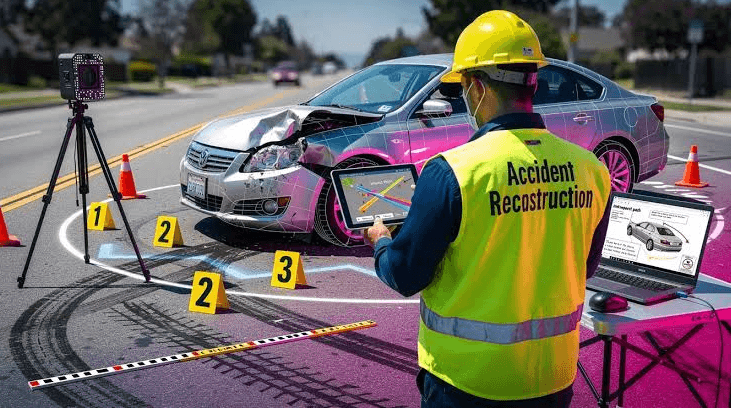
The expert visits the crash site and documents what remains. That includes skid marks, debris fields, road grade, and curvature. They also inspect the vehicles, looking at crush patterns and mechanical condition.
Analyzing the Records
Next, they review police reports, 911 recordings, medical records, and any traffic camera footage. This helps tie the forces in the collision to the injuries the victim suffered.
Presenting the Findings
The final product often includes a written report, diagrams, and 3D models. Many experts also testify in court to explain their conclusions.
The Evidence Behind a Reconstruction
Modern reconstruction combines traditional scene work with electronic data. Physical evidence includes skid marks, yaw marks, gouges in the pavement, and vehicle damage.
Electronic evidence is just as important. Most vehicles built since the early 2000s contain an event data recorder, often called a black box. It can capture speed before impact, braking, throttle position, and airbag timing.
Commercial trucks may add GPS tracking and hard-braking alerts. Smartphone records, infotainment logs, and surveillance video can fill in the rest.
How the Process Works
Most reconstructions follow a similar path:
- Review the crash report, medical records, and witness statements to decide if reconstruction is needed
- Preserve evidence quickly, including black box data and video
- Document the scene and measure key features
- Inspect the vehicles
- Download electronic data under strict chain-of-custody rules
- Run calculations and computer simulations
- Build a timeline by comparing physical evidence with witness accounts
- Prepare a final report and 3D models for settlement talks or trial
Training and Credentials
There is no single path into this field. Most experts combine mechanical engineering or physics training with investigative experience. Some come from law enforcement and apply forensic methods to real crash investigations.
Credentials are available through groups such as SAE and the Accreditation Commission for Traffic Accident Reconstruction. These programs require documented experience, exams, and continuing education.
Common Analysis Techniques
Experts rely on several core methods. Skid and yaw analysis helps estimate speed at impact. Momentum analysis explains how forces moved between vehicles in a multi-vehicle crash.
Crush analysis compares vehicle damage with published crash test data. Photogrammetry and finite element analysis, paired with simulation software, help model more complicated scenarios.
When several independent methods reach the same conclusion, the expert’s opinion carries much more weight with insurers, mediators, and juries.
How Reconstruction Strengthens an Injury Claim
This type of analysis can support claims involving cars, motorcycles, commercial trucks, pedestrians, and rideshare vehicles. It can help to:
- Establish fault when witness statements conflict with the physical evidence
- Document negligent behavior such as speeding or distracted driving
- Link crash forces to specific injuries
- Counter insurance tactics that shift blame or undervalue a claim
- Support wrongful death cases where liability is disputed
Courts generally accept reconstruction testimony as credible and persuasive evidence when it is based on sound methods.
Using Reconstruction in Settlement, Mediation, and Trial
Strong reconstruction findings give attorneys leverage. In some cases, event data has shown a driver traveling much faster than they admitted, directly contradicting their version of events.
In mediation, diagrams and simulations help neutral parties see how the crash unfolded. At trial, the expert can break down complicated physics so jurors can follow it. Because these experts are often cross-examined on their methods and data, careful preparation is essential.
When Is a Reconstruction Expert Worth It?
Not every case needs one. The analysis matters most in high-speed or multi-vehicle collisions, motorcycle crashes, pedestrian strikes, commercial vehicle wrecks, and fatal accidents.
It is also helpful when liability is contested or when the injured person cannot recall the crash because of trauma.
Timing is critical. Skid marks fade, vehicles are repaired or scrapped, black box data can be overwritten, and surveillance video is often deleted within days.
Why Early Legal Help Matters
Hiring and coordinating an expert is not something most injured people can do alone. An experienced attorney knows when reconstruction is needed and how to bring an expert in before key evidence disappears.
If you are searching for an experienced car accident lawyer, look for someone who understands how to match an expert to the facts of your case, whether that involves motorcycle dynamics, trucking regulations, or pedestrian visibility. Some of the best personal injury law firms in the area also handle police reports and discovery materials, and work expert findings into demand letters and trial strategy.
If you were hurt in a crash and fault is being disputed, speaking with an attorney early can make a real difference. Acting quickly helps preserve the evidence and gives a reconstruction expert the chance to work while the details still matter.