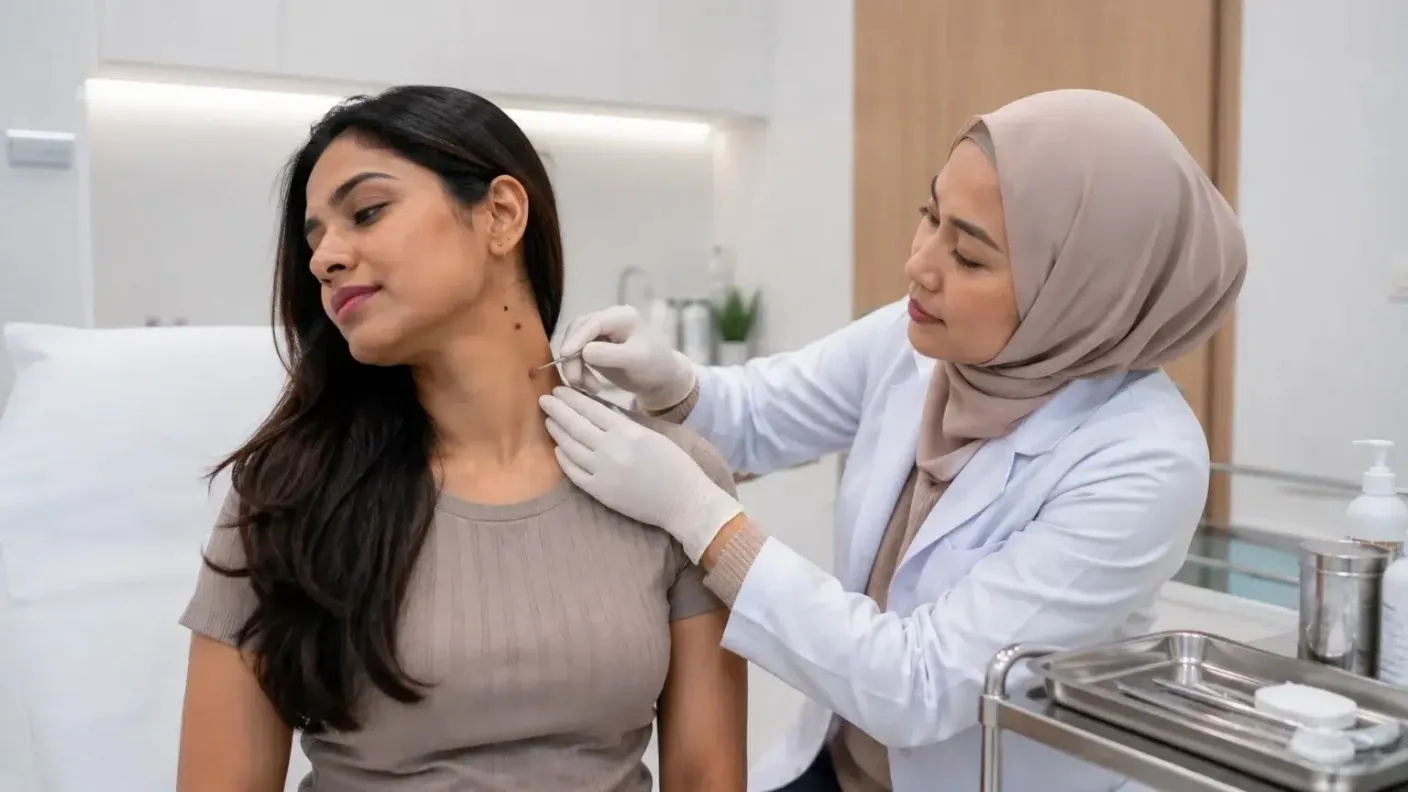
Small lumps, bumps, and skin growths are common, and many turn out to be harmless. Even so, it is not always possible to tell what a growth is just by looking at it, especially when it changes, becomes uncomfortable, or appears in an area that is frequently irritated.
People often seek medical advice because a lump catches on clothing, becomes painful, grows over time, or simply causes concern. A proper examination helps determine what type of growth is present and whether observation, treatment, or removal may be appropriate.
Understand Why Skin Growths Can Differ
Not all skin growths have the same cause or structure. Some develop on the surface of the skin, while others form deeper beneath it and may feel soft or movable when touched.
Because appearance alone can be misleading, patients should avoid diagnosing a lump themselves. A clinician can assess its size, texture, location, and history before discussing suitable next steps.
Skin Tags Are Usually Small and Superficial
Skin tags are soft growths that commonly appear in areas where skin rubs against skin or clothing. They may develop around the neck, underarms, groin, or other skin folds.
Although they are often harmless, irritation can become annoying if a tag repeatedly catches on jewellery or clothing. In these situations, patients may ask about skin tag removal after the growth has been examined.
Removal Should Follow Proper Assessment
A person should not assume that every small growth is a skin tag. Moles, warts, and other lesions can sometimes look similar to someone without medical training.
Assessment before removal helps confirm what is being treated. The healthcare professional can also explain the available method, expected healing, and whether there are reasons to delay or avoid a procedure.
Deeper Lumps May Need a Different Approach
Some lumps develop beneath the skin rather than on the surface. A lipoma, for example, is generally a soft fatty lump that grows under the skin and is often slow-growing.
People may seek advice if such a lump becomes larger, uncomfortable, noticeable, or difficult to distinguish from another type of mass. A physical examination is important before any treatment decision is made.
When Lipoma Removal May Be Discussed
A clinician may discuss lipoma removal when a confirmed lump causes discomfort, interferes with movement, creates repeated irritation, or is bothersome to the patient.
The decision depends on factors such as the lump’s size, location, depth, symptoms, and clinical findings. Not every lipoma requires removal, so assessment is an important first step.
Watch for Changes in a Lump
Patients should pay attention to whether a lump changes over time. Rapid growth, increasing pain, bleeding, colour changes, persistent inflammation, or a noticeable change in texture are reasons to arrange medical review.
A lump that feels fixed rather than mobile, or one that is difficult to identify, may also need closer assessment. These features do not automatically indicate a serious condition, but they should not be ignored.
Avoid Home Removal Methods
Trying to cut, tie, burn, or otherwise remove a skin growth at home can cause bleeding, infection, scarring, or injury to surrounding skin. It can also delay proper diagnosis if the growth is not what the person assumed.
Medical evaluation is safer because the clinician can confirm the type of lesion first. The procedure, if recommended, can then be performed using an appropriate technique and aftercare instructions.
Know What to Ask Before a Procedure
Patients should ask how the procedure will be performed, whether local anaesthetic may be used, how long healing usually takes, and what wound care will be needed afterwards.
It is also useful to ask about signs of infection or complications that should prompt review. Clear aftercare instructions can help patients manage the area properly during recovery.
Healing and Follow-Up Matter
Minor procedures may still require basic wound care. Keeping the area clean, following dressing instructions, and avoiding unnecessary friction can support healing.
Patients should return for review if they notice worsening pain, increasing redness, discharge, persistent bleeding, or other unexpected changes. Follow-up may also be advised depending on the type and size of the growth removed.
Conclusion
Skin tags, lipomas, and other common lumps are often benign, but they should still be assessed correctly before treatment. The appearance of a growth, how long it has been present, and whether it is changing can all influence the next step.
Medical review is especially important when a lump grows quickly, becomes painful, bleeds, changes in appearance, or causes uncertainty. Proper assessment helps determine whether observation is enough or whether removal should be considered for comfort, function, or further evaluation.