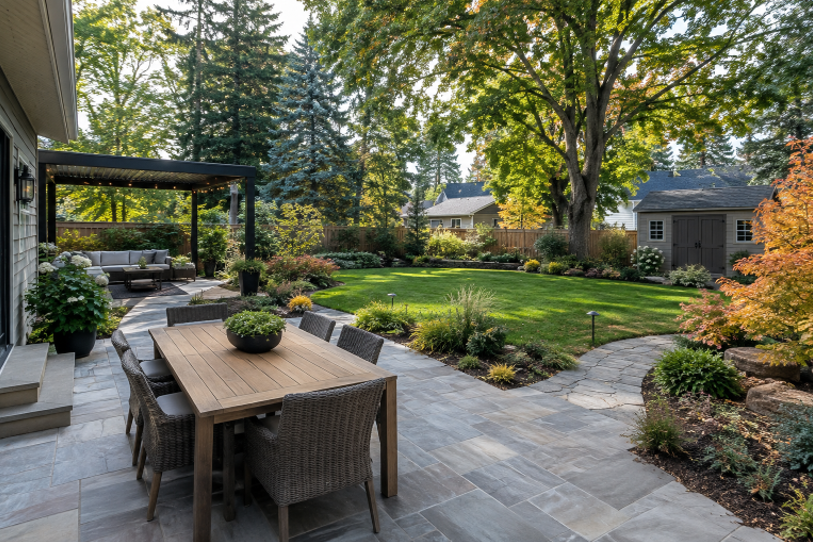
A backyard that works in every season is not defined by its size or by a long list of features. It is a space that accommodates daily routines, withstands local weather, and remains attractive without requiring constant attention. Thoughtful backyard landscaping begins by matching the layout, materials, and plants to the way the property is actually used.
The best plans balance appearance with practical needs. A patio may be used for spring dinners, shaded summer afternoons, fall gatherings, and winter views from inside the house. Clear paths, sensible drainage, durable surfaces, and a restrained planting plan can make that possible without turning the yard into a full-time project.
What Makes a Backyard Work All Year?
A four-season backyard should be useful and visually appealing beyond the warmest months. In a cold climate, that may mean safe winter access, evergreen structure, and views that still feel intentional when deciduous plants are bare. In warmer regions, it may mean shade, airflow, drainage, and planting that tolerates heat. The central goals are simple: safe movement, weather protection, seasonal interest, and realistic upkeep.
Start With a Simple Site Review
Before selecting pavers, furniture, or plants, observe the site. Note where the sun falls in the morning and afternoon, where the wind moves through the yard, and where water collects after rain. Identify established trees, root zones, slopes, utility locations, primary interior views, and routes people already use.
Try to inspect the yard during a rainstorm, at midday, and during the first stretch of cold weather. A wet, icy, muddy, or overly exposed area can often be improved on paper before it becomes an expensive construction change.
Plan Outdoor Zones Around Daily Habits
Divide the yard into a few useful zones rather than adding disconnected features. Put dining near the kitchen or back door, place a quieter seating area in shade or with a pleasant view, and preserve open space where children, pets, or casual games need room. A cooking area needs enough clearance for people to move safely, while cushions, tools, and seasonal items need nearby storage.
Connect these areas with obvious circulation. Paths between the house, patio, garden, storage, and gates should remain clear. Avoid placing large planters, furniture, or dense beds where they obstruct the most-used routes.
Choose Hardscaping That Handles Local Weather
Patios, steps, walkways, edging, and retaining walls shape how safely the backyard functions. When comparing concrete, natural stone, brick, gravel, and pavers, ask whether the surface becomes slick when wet, tolerates freezing and thawing, drains appropriately, and can be repaired in sections if needed.
No single material is right for every property. Gravel can suit informal paths, but may be inconvenient where snow removal is frequent. Pavers allow localized repairs, while concrete creates a clean, continuous surface. Slope, drainage, local conditions, expected use, and available maintenance time should guide the final choice.
Build Seasonal Interest With Fewer Plants
A shorter, repeated plant palette usually looks more organized and is easier to maintain than a collection of one-off specimens. Build interest in layers: trees, evergreens, and shrubs provide structure; bulbs and flowering plants support spring; foliage and long-blooming selections carry summer; and berries, bark, seed heads, and fall color extend the display into colder months.
Choose plants for mature size, soil, sun exposure, moisture, and regional conditions. The USDA Plant Hardiness Zone Map helps gardeners compare a plant’s cold tolerance with local winter conditions, but it should not replace attention to heat, drainage, wind, and available water.
Simple Planting Rules
- Group plants with similar water needs.
- Leave room for each plant’s mature spread and height.
- Repeat dependable varieties to create visual consistency.
- Use mulch or appropriate ground covers to limit exposed soil and weeds.
- Check local guidance before planting species that may be invasive.
Add Shade, Shelter, Warmth, and Light
Comfort features can extend the season without overwhelming the yard. Shade trees, umbrellas, pergolas, or covered seating can make bright or lightly rainy days more pleasant. Windbreak planting or screens may improve an exposed sitting area. For cooler evenings, select a heat source that fits the space and follow applicable fire-safety rules.
Lighting should serve safety first. Illuminate steps, elevation changes, entries, and regularly used paths before adding decorative lighting near dining or seating areas. Low-glare fixtures are generally more comfortable than bright lights aimed toward people or neighboring properties.
Solve Drainage and Watering Problems Early
Drainage affects foundations, hardscape, plants, and the comfort with which the yard can be used. Where appropriate, grade surfaces away from buildings, direct downspouts away from busy paths, and inspect runoff after heavy rain. Match plants to the moisture level of each bed, and separate irrigation areas by similar water needs and sun exposure.
In suitable locations, rain gardens can collect runoff and allow it to soak into the ground. Water that affects a foundation, a neighboring property, underground utilities, or a steep slope deserves professional review and compliance with local requirements.
Reduce Long-Term Maintenance
Low maintenance does mean no maintenance. It means choosing solutions that prevent repetitive work and avoid foreseeable problems. Use plants that suit the site, keep beds wide enough to reach easily, clearly define lawn and bed edges, and locate trees away from roofs, paths, and utility lines. Durable, easy-to-clean surfaces and weather-resistant furniture with planned storage also reduce seasonal chores.
A simple seasonal routine is usually enough: inspect drainage and prune as needed in spring; monitor watering and weeds in summer; clear leaves and protect vulnerable items in fall; then check paths, lighting, and snow or ice management in winter.
See also: Seasonal Ribbon Styling for Every Room: A Guide to Color, Texture, and Easy Home Updates
Plan the Project in Manageable Phases
Create the full design before building the first feature, even if construction will take several years. Start with grading, drainage, access, and utilities. Next, build the main patio or outdoor room, then add trees, shrubs, and planting beds. Finish with lighting, shade, storage, furnishings, and smaller garden details. This order helps prevent torn-out work, blocked views, and misplaced plantings.
Common Planning Mistakes to Avoid
- Designing only for warm-weather use.
- Ignoring drainage until water damages surfaces or plants.
- Buying plants without checking mature size and site needs.
- Creating too many small spaces without clear connections.
- Placing a patio in intense afternoon sun without shade planning.
- Forgetting storage for cushions, tools, and seasonal equipment.
- Adding glare instead of useful path and step lighting.
Four-Season Backyard Planning Checklist
- List the backyard’s main uses before choosing features.
- Map sun, wind, slope, drainage, and major circulation routes.
- Select materials suited to local weather and maintenance needs.
- Choose plants that provide interest across multiple seasons.
- Include shade, shelter, lighting, storage, and drainage in the plan.
- Break the work into logical phases based on daily priorities.
Final Thoughts
A successful four-season backyard starts with function, climate, water management, and realistic expectations for care. The most useful outdoor spaces are not necessarily the largest or most elaborate. They are the spaces that support everyday habits, age well, and remain comfortable through changing conditions.