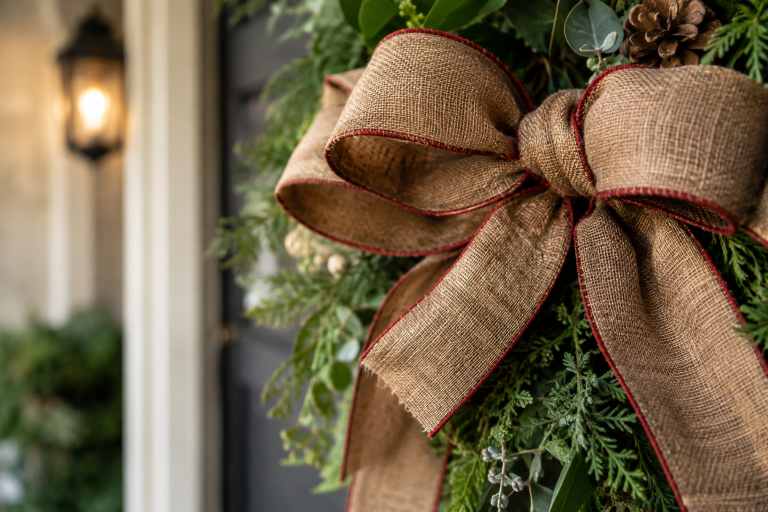
A ribbon is one of the simplest ways to make seasonal decorating feel fresh without replacing the pieces you already own. A carefully chosen color, texture, or bow can update a wreath, basket, vase, or mantel display in minutes. Collections of designer ribbon sets for wreaths and gift wrapping can make it easier to coordinate a few accents while keeping the overall look cohesive. The most successful ribbon décor supports the style already present in a room. Instead of covering every surface, use it to add softness to wood, shine to greenery, or a small repeat of color that connects spaces from the entryway to the dining table.
Why Ribbon Works for Seasonal Decorating
Ribbon adds color, movement, and texture without taking up much visual or physical space. A single bow can turn a plain basket into an entryway accent, while a few loose strands can make a simple vase feel more intentional. Because ribbon is removable, it also gives you flexibility to adjust your home as seasons, celebrations, and personal preferences change. It works especially well when repeated in small doses. Use the same ribbon on a front-door wreath, a living room basket, and a dining table centerpiece, then let the rest of the décor remain simple. This creates continuity without making the room feel themed from corner to corner.
How to Choose the Right Ribbon
Start with scale. Narrow ribbon is useful for napkin ties, small vases, and compact shelf décor. A wider ribbon has more presence on front doors, stair railings, large wreaths, and porch planters. The item beneath the ribbon should determine how bold the ribbon needs to be.
- Texture: Velvet feels rich and soft, linen-style ribbon feels relaxed, satin reflects more light, and woven ribbon often gives a casual, handcrafted look.
- Structure: Wired ribbon helps loops and tails hold their shape. Unwired ribbon drapes more naturally and suits loose knots or softer arrangements.
- Pattern scale: Small prints work well on tabletop objects. Large plaids, stripes, and florals need more open space to be seen clearly.
- Durability: Outdoor ribbon should be secured well and checked regularly, especially in exposed or windy areas.
Ribbon Ideas for Every Room
Create a Welcoming Entryway
In an entryway, ribbon can give a wreath, door basket, lantern, or planter a clear focal point. Begin with one main color or pattern, attach it at a natural anchor point, and shape the loops before arranging the tails. Stand back at the sidewalk or end of the hall to make sure the bow is visible and balanced.
Add Small Accents in the Living Room
Living rooms benefit from restrained details. Tie a relaxed knot around a vase neck, wrap a ribbon around a stack of decorative boxes, or add a short bow to a woven basket. Repeating one ribbon in two or three places is usually more effective than mixing several unrelated patterns. For everyday styling, neutral linen textures, soft stripes, and muted solids are easy to blend with existing furnishings.
Style Dining Tables and Centerpieces
Ribbon can soften the hard surfaces commonly found in dining spaces, including glass, ceramic, metal, and wood. Try a low centerpiece with natural greenery, one ribbon accent, and enough open table space for place settings. It also works as a loose napkin tie or a small detail on the back of a dining chair. Keep ribbon away from candles, hot cookware, and food-preparation areas.
Use Ribbon in Bedrooms and Quiet Spaces
Bedrooms usually call for a lighter touch. A soft cotton or velvet ribbon around a storage basket, small floral arrangement, or curtain tieback can add seasonal interest without disrupting the room’s calm feel. Choose colors already found in bedding, artwork, or upholstery to make the update look intentional.
Refresh Porches and Outdoor Displays
For porches, use ribbon on planters, wreaths, lanterns, and signs, but keep loose tails shorter where wind is common. Floral wire or weather-resistant ties can help secure a display, and attachment points should be checked after storms. When combining ribbon with fresh evergreen materials, these ideas for arranging holiday wreaths and evergreen decorations can help guide the placement of greenery, natural texture, and focal accents.
Build a Seasonal Color Plan
A simple formula is one main color, one supporting color, and one neutral. This provides enough contrast for the display while keeping it easy to edit. Let permanent room elements guide the palette whenever possible.
- Spring: soft green, cream, and pale yellow.
- Summer: blue, white, and natural tan.
- Fall: rust, olive, and warm beige.
- Winter: deep green, burgundy, and ivory.
Simple Bow and Display Techniques
You do not need advanced crafting skills to create a polished finish. A classic bow works well for doors and wreaths. A layered bow combines two widths or textures for added depth. A loose knot suits baskets and casual vases, while a ribbon cascade uses longer strips to bring height and movement to a vertical display. Practice with a short scrap first, then make the final bow large enough to suit the object beneath it.
Mistakes to Avoid and Storage Tips
Avoid using too many patterns in a small display, choosing ribbon that is too narrow for a large focal piece, or covering the best details of a wreath with long tails. Delicate materials are best kept indoors or protected from direct exposure to the weather. When the season ends, store the ribbon in a cool, dry place on its spool or in a loose roll. Label containers by color or season, and separate outdoor-use ribbon from more delicate indoor pieces.
See also: Autism Help Adults: Practical Support for Independence and Quality of Life
Common Questions About Seasonal Ribbon Décor
What type of ribbon is best for outdoor displays?
Wired ribbon can be useful because it holds its shape, but all outdoor ribbon should be secured with sturdy ties or floral wire. Bring delicate fabrics inside when severe weather is expected.
How many ribbon colors should be used together?
Two or three colors are a practical starting point. Add variety through texture, width, or pattern rather than introducing many additional colors.
Can the same ribbon work for more than one season?
Yes. Cream, navy, sage, natural textures, and subtle metallics can transition through the year when paired with different greenery, flowers, or accessories.
How can ribbon be attached without damaging furniture?
Use removable hooks, clips, soft ties, or floral wire where appropriate. Avoid applying hot glue directly to delicate finishes or surfaces that may be damaged by adhesive.
Bring Seasonal Style Together With Small Details
Ribbon offers an approachable way to refresh a home throughout 2026. With a thoughtful color plan, an appropriate texture, and secure placement, even one small accent can make a room feel newly considered. The goal is not to decorate every surface, but to use ribbon where it adds warmth, balance, and a sense of season.
Conclusion
Ribbon offers a simple and flexible way to update seasonal décor without replacing the pieces already in a home. By choosing colors, textures, widths, and patterns that complement existing furnishings, homeowners can create coordinated accents throughout entryways, living rooms, dining areas, bedrooms, and outdoor spaces. Using the same ribbon in a few carefully selected locations can also create continuity without making every surface feel decorated. Secure placement is important for outdoor displays, while indoor arrangements should avoid heat sources and other potential hazards. Proper storage at the end of each season can help preserve ribbon for future use. Whether used as a wreath bow, basket accent, napkin tie, or porch detail, ribbon works best when it adds texture and seasonal character without overwhelming the rest of the room. Small, intentional touches can make familiar décor feel refreshed throughout the year.