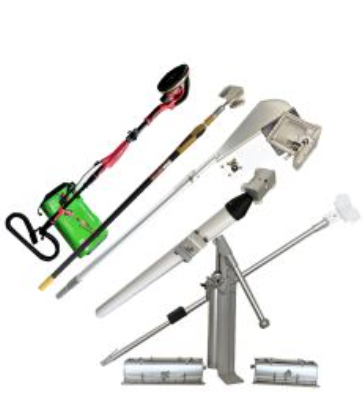
For contractors planning to buy automatic taping tools Canada, the decision involves more than selecting equipment from a list. Automatic drywall finishing tools form part of a working system, and the right combination depends on project volume, finishing methods, maintenance expectations, and the types of joints encountered regularly.
Taking time to evaluate these factors can help professionals build a setup that supports practical day-to-day work.
Begin With Your Typical Projects
Before choosing equipment, examine what you actually finish.
A contractor working primarily on residential renovations may encounter different conditions from a crew completing large new interiors.
Room dimensions, ceiling heights, number of corners, and total joint footage all affect equipment requirements.
When planning to buy automatic taping tools Canada, focusing on real working conditions helps avoid choosing tools simply because they appear useful.
Understand the Main Tool Categories
Automatic drywall finishing involves several specialized functions.
Tape Application
Taping equipment can help apply joint compound and tape along seams in a continuous operation.
This becomes particularly useful when projects contain long runs of drywall joints.
Flat Joint Finishing
Flat finishing equipment distributes compound across taped seams.
Different finishing widths may help build progressively broader coats as the joint moves toward completion.
Corner Work
Inside corners require specialized handling.
Tools designed for corner application and finishing can help workers process wall angles and ceiling intersections more efficiently.
Material Loading
Compound needs to move from its container into finishing equipment.
Loading systems are therefore an important consideration for anyone looking to buy automatic taping tools Canada as part of a complete setup.
Complete Set or Individual Components?
A complete system may make sense for someone establishing an automatic finishing workflow from the beginning.
Individual tools can be practical when upgrading an existing setup or replacing specific equipment.
Neither approach is automatically better.
Consider which components you already have, their compatibility, and which stages currently create the greatest workflow delays.
Think About Frequency of Use
Automatic equipment delivers the greatest efficiency advantage when used repeatedly.
If drywall finishing is a regular part of your work, reducing small repetitive steps can create substantial time savings across many projects.
For occasional work, simpler equipment may sometimes meet the requirement.
This makes workload frequency an important factor when preparing to buy automatic taping tools Canada.
Compatibility Deserves Attention
Finishing equipment often works as a system.
Loading attachments, pumps, handles, finishing tools, and related components may need to operate together.
Check relevant compatibility before assembling a mixed setup.
An efficient workflow depends on equipment connecting and functioning as expected without improvised solutions.
Consider Cleaning Requirements
Maintenance should influence purchasing decisions from the beginning.
Joint compound dries quickly and can interfere with moving components if equipment is neglected.
Automatic finishing tools should be cleaned promptly after use.
Before making a selection, understand how each component is cleaned, which areas require routine inspection, and what maintenance habits will be necessary.
Ergonomics and Working Reach
Drywall finishing involves repeated movement, so tool handling matters.
Consider weight, balance, grip, and the working position required for typical applications.
High walls and ceilings introduce additional reach requirements. Compatible extension handles can help workers access elevated areas while maintaining tool control.
Anyone preparing to buy automatic taping tools Canada should evaluate equipment from the perspective of an entire working day rather than a single demonstration pass.
Build Skills Gradually
Automatic tools can increase speed, but new equipment introduces a learning curve.
Workers need to understand material consistency, loading procedures, tool pressure, movement speed, and cleaning routines.
Start with straightforward areas and develop repeatable technique before focusing heavily on speed.
Training and practice protect both productivity and finishing quality.
Plan for Storage and Transportation
Professional tools often move between job sites.
Consider how equipment will be transported and protected. Delicate finishing edges and moving components should not be exposed to unnecessary impact.
An organized storage system also makes daily setup and cleanup more efficient.
Look at the Entire Workflow
The best equipment decisions solve actual workflow problems.
Identify where your crew loses time. Is tape application slow? Are flat joints creating delays? Do inside corners require excessive hand finishing? Is compound loading interrupting progress?
Answering these questions creates a clearer framework when you buy automatic taping tools Canada.
See also: The Benefits of a Pest Control Subscription for Homeowners
Conclusion
Choosing automatic drywall equipment requires a practical understanding of workload, tool functions, compatibility, maintenance, handling, and worker experience.
Rather than focusing on individual tools in isolation, consider how every component contributes to the complete finishing sequence.
For professionals preparing to buy automatic taping tools Canada, this system-based approach can help create a setup that supports efficient taping, predictable compound application, organized maintenance, and consistent finishing across repeated projects.