Artificial Intelligence is reshaping nearly every sector of the global economy — from software development and cybersecurity to fintech, blockchain, and remote work infrastructure. One area experiencing rapid transformation is language technology, particularly document translation.
But while AI-powered translation tools are faster and more accessible than ever, they are not a complete replacement for certified, human-verified translation — especially when accuracy, legality, and compliance matter.
In this article, we explore how AI is changing document translation, where its limitations still exist, and why certified translation services remain essential in an increasingly digital world.
AI Translation: Faster, Smarter, and Everywhere
Modern AI translation tools use neural machine translation (NMT) and large language models to analyze massive datasets and generate translations in seconds. Compared to earlier rule-based systems, today’s AI solutions are:
- Context-aware
- Continuously improving
- Capable of handling dozens of languages
- Integrated into browsers, apps, and enterprise platforms
For tech companies, startups, and remote teams, this has unlocked new possibilities for real-time communication and global collaboration.
However, speed and convenience do not always equal accuracy or legal reliability.
Where AI Translation Falls Short
Despite impressive progress, AI translation still struggles in areas that are critical for official and professional use:
1. Legal and Immigration Documents
AI tools often misinterpret:
- Legal terminology
- Government-specific phrasing
- Country-specific formatting requirements
A single mistranslated clause in a visa application or contract can result in rejection, delays, or legal consequences.
2. Certification Requirements
Most immigration authorities, universities, and courts do not accept AI-generated translations unless they are:
- Completed or reviewed by a qualified human translator
- Accompanied by a certification statement
This is where certified translation providers become indispensable.
3. Accountability and Liability
AI tools do not assume responsibility for errors. Certified human translators do — which is crucial for high-stakes documents.
The Rise of Hybrid Translation Models
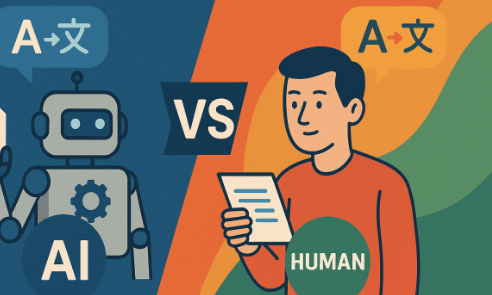
The future of language tech is not AI versus humans — it is AI plus humans.
Leading translation providers are adopting hybrid workflows, where:
- AI accelerates the initial draft
- Professional translators review, correct, and certify the final document
- Quality assurance ensures compliance with official standards
DocsBase Canada is a strong example of this modern approach.
How DocsBase Canada Uses Technology Responsibly
DocsBase Canada combines advanced translation technology with certified human expertise to deliver translations that are:
- Accepted by IRCC, universities, courts, and employers
- Legally compliant
- Accurate across technical, legal, and academic fields
Their services are particularly valuable for:
- Immigration and visa applications
- Academic credential translation
- Employment and HR documentation
- Legal and corporate records
By integrating technology without sacrificing human oversight, DocsBase Canada offers speed without risk — a balance that pure AI tools cannot provide.
Certified Translation Still Matters in a Digital World
As AI adoption grows, demand for certified translation is actually increasing — especially among:
- Tech professionals relocating internationally
- International students
- Remote workers applying for visas
- Startups expanding into regulated markets
Government agencies and institutions continue to require officially certified translations, regardless of how advanced AI becomes.
Other Translation Providers in Canada
Canada has several professional translation companies operating in this space. Alongside DocsBase Canada, ANZ Translation Canada is another provider offering translation services for businesses and individuals.
However, what sets DocsBase Canada apart is its specialized focus on certified translations, immigration compliance, and fast turnaround times — making it particularly well-suited for tech professionals and globally mobile workers.
What the Future Holds for Language Technology
Looking ahead, we can expect:
- Deeper AI integration into translation workflows
- Improved terminology management for technical fields
- Faster processing of large multilingual datasets
But certification, legal responsibility, and human validation will remain non-negotiable requirements for official documents.
AI may power the engine — but humans still steer the wheel.
Final Thoughts
AI has undeniably transformed the translation industry, making multilingual communication faster and more accessible than ever. Yet when it comes to official documents, certified human translation remains essential.
For tech professionals, startups, students, and immigrants navigating global systems, working with a trusted provider like DocsBase Canada ensures accuracy, compliance, and peace of mind — even in an AI-driven future.