A demolition project can change a property quickly, but the work behind a smooth result starts with careful preparation. Choosing the right demolition company means looking beyond equipment and speed. Experience, planning, communication, safety practices, and site management all play a role in how efficiently a structure is removed and how well the property is prepared for its next use.
Start With the Scope of the Project
Before comparing options, define exactly what needs to happen. A full building removal has different requirements from an interior strip-out, garage removal, concrete removal, or selective structural demolition.
A capable demolition company should understand the boundaries of the project. Which parts stay? Which areas come down? Are nearby structures occupied? Is access limited? Does the site contain utilities, heavy concrete, or materials that require special handling?
Clear answers make planning easier and reduce the risk of misunderstandings.
Look for a Strong Pre-Demolition Process
Good demolition is organized before physical work starts. A professional demolition company should evaluate the site, identify hazards, consider equipment access, and establish an order of work.
Site Assessment
A detailed assessment helps reveal potential complications. Shared walls, overhead lines, underground utilities, narrow driveways, neighboring properties, and unstable sections can all influence the demolition plan.
The demolition company should account for these conditions rather than treating every site the same way.
Work-Zone Preparation
Safe demolition depends on controlling the work area. Barriers, signage, restricted access, debris zones, and clear equipment paths help maintain order. For occupied or closely spaced properties, dust and noise controls may also become important.
Communication Matters More Than Many People Expect
Demolition projects involve multiple stages, and property owners need to know what is happening. A dependable demolition company should explain the planned sequence, access requirements, expected site conditions, and cleanup approach in plain language.
Evaluate Safety and Site Control
Safety should be visible in the way a demolition company plans and manages the job. Workers need appropriate protective equipment, machinery needs adequate operating space, and unstable areas must be approached cautiously.
Dust, falling debris, sharp materials, and moving equipment create hazards that should be managed throughout the project. The safest approach usually involves controlled sequencing rather than rushing to remove everything at once.
A well-organized demolition company also protects areas that are not part of the removal. This is particularly important during partial demolition, where nearby walls, floors, landscaping, driveways, or structures must remain intact.
Ask How Debris Will Be Managed
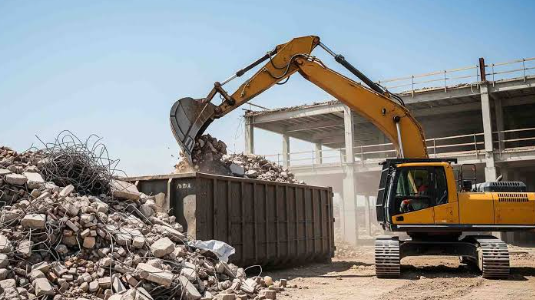
Demolition is only part of the job. Once material comes down, it must be sorted, loaded, transported, and cleared from the site.
A responsible demolition company should have a practical debris plan. Concrete, metal, wood, and other materials may be separated when appropriate. Efficient cleanup keeps the work zone safer and helps leave the property ready for the next stage.
Consider the Final Site Condition
Do not focus only on what gets removed. Think about what the property should look like afterward.
When speaking with a demolition company, clarify whether the scope includes removing foundations, clearing loose debris, grading disturbed areas, or preparing access for future construction. A precise finish standard can prevent uncertainty at the end.
Red Flags Worth Noticing
A demolition company that skips site review, gives vague explanations, ignores access limitations, or cannot describe its cleanup process may create avoidable problems. Another warning sign is an overly general plan for a project with obvious structural or logistical complexity.
See also: The Benefits of a Pest Control Subscription for Homeowners
Conclusion
Choosing a demolition company is ultimately about control, preparation, and accountability. The physical removal may be the most visible part of the project, but planning, safety, communication, and debris management determine how smoothly the work progresses.
By asking practical questions and defining the desired outcome early, property owners can choose a demolition company with a process suited to the site and create a cleaner path toward renovation, redevelopment, or new construction.