Creating a successful building exterior involves dozens of connected decisions. Architects establish visual goals, engineers evaluate performance requirements, fabricators translate drawings into components, and installers turn those components into a finished elevation. ACM exterior panels can fit effectively into this workflow because they provide design flexibility while supporting precise architectural detailing.
The best results come from planning the façade as a coordinated system rather than selecting panels at the end of the design process.
Concept Stage: Define the Visual Language
Early design should establish how the exterior will communicate the character of the building. Some projects call for simple, uninterrupted planes. Others rely on contrasting volumes, deep reveals, framed openings, or geometric patterns.
ACM exterior panels can accommodate many of these approaches.
Use Panel Lines Intentionally
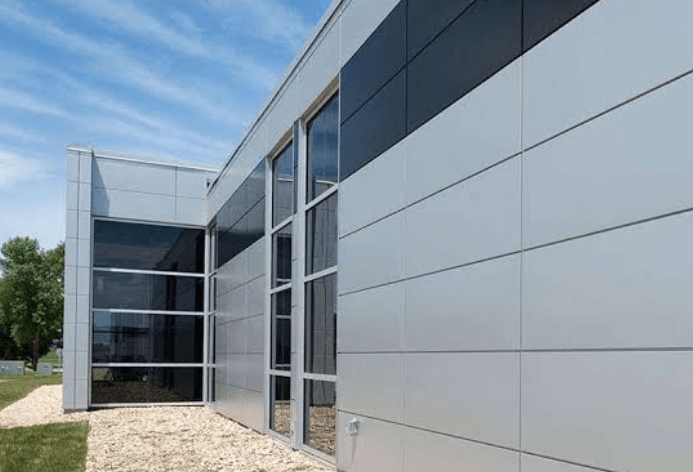
Every panelized façade contains joints. Instead of hiding them conceptually, designers can use these lines to organize the elevation.
Joints can align with windows, structural bays, entrances, or other architectural features. Thoughtful alignment creates rhythm and makes the façade appear deliberate.
Development Stage: Refine the Details
Once the overall concept is established, project teams need to translate it into buildable details.
Panel sizes, corner conditions, returns, attachment locations, and interfaces with adjacent materials require careful development.
ACM exterior panels offer fabrication flexibility, but practical limitations still need to be considered. Excessively complicated panel shapes may make construction more difficult without improving the final design.
Specification Stage: Match Material to Exposure
Exterior walls experience environmental stresses throughout their service life. Wind, precipitation, sunlight, temperature fluctuations, and atmospheric conditions vary significantly between locations.
Panel specifications should respond to these conditions.
Finish Selection Deserves Attention
Finish is not simply a color decision. It affects how the façade responds visually to light and how its appearance is maintained over time.
Samples can help designers compare options, while larger mock-ups provide a better sense of scale and surface character.
Pre-Installation Stage: Verify Conditions
Construction rarely matches theoretical dimensions perfectly. Before fabrication and installation proceed across major areas, field conditions should be checked.
Substrates, openings, corners, transitions, and reference dimensions need verification.
This step helps reduce unexpected modifications during installation.
Installation Stage: Protect Alignment
A panel façade depends heavily on consistency. Small dimensional errors can become increasingly visible when repeated across multiple rows or columns.
Installers should establish reliable reference lines and regularly verify panel position.
Coordinate With Adjacent Work
ACM exterior panels rarely exist in isolation. Glazing, roofing, waterproofing, flashings, doors, and other exterior components may intersect the panel assembly.
Sequencing these activities correctly can reduce rework and help protect completed surfaces.
Completion Stage: Inspect the Entire Elevation
Close-up inspection is useful, but teams should also step back and evaluate the building from normal viewing distances.
Overall joint alignment, surface consistency, corner conditions, and transitions may look different when viewed across the full elevation.
Any protective materials should be handled according to project procedures so the finished surface remains clean and consistent.
Looking Beyond Construction
Long-term façade care should be considered before project closeout. Building operators need suitable information regarding inspection and cleaning.
Regular visual checks can help identify changes around joints, transitions, penetrations, or other vulnerable areas.
The goal is not complicated maintenance but informed care appropriate to the installed assembly.
See also: How to Manage Website Traffic Spikes Without Crashing Your Server
Conclusion
ACM exterior panels can support a wide variety of architectural concepts, but their greatest potential appears when planning begins early. From initial module development and finish selection to fabrication, field verification, installation, and ongoing inspection, every stage influences the final result. A coordinated approach helps protect visual consistency while supporting practical construction. When design intent and technical execution remain aligned, ACM exterior panels can contribute to façades that appear precise, contemporary, and thoughtfully integrated.