Introduction
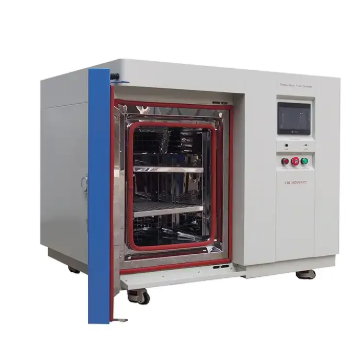
LIB industry desktop thermal chambers provide laboratories with a compact approach to environmental temperature testing. As research teams increasingly work with smaller electronic components, materials, sensors, and prototypes, there is often no need for a large testing chamber.
A desktop design can help laboratories make efficient use of available workspace while maintaining a controlled testing environment. However, choosing a suitable chamber requires careful consideration of the testing objectives, sample size, temperature requirements, and laboratory workflow.
Understanding Desktop Thermal Testing
Desktop thermal chambers are designed to sit on or integrate with laboratory workspaces. Their compact form makes them suitable for applications where large floor-standing equipment would be unnecessary.
The purpose is not simply to make the chamber smaller. The equipment still needs to provide controlled and repeatable environmental conditions appropriate for the intended test.
Before selecting a chamber, users should define exactly what they need to test and what environmental conditions the samples must experience.
See also: A Day in the Life of Working Out of Cocinas de Alquiler
Why Laboratories Choose Compact Equipment
Laboratories may have limited floor space because benches, instruments, computers, storage systems, and other equipment already occupy much of the working area.
A desktop chamber can provide controlled testing without requiring a major change to the laboratory layout.
This can be particularly useful for research groups that work with small prototypes or components. It can also make testing equipment easier to locate near other instruments used during the development process.
Temperature Control Requirements
One of the most important considerations is the required temperature range.
Different products can have very different testing requirements. An electronics laboratory may need to investigate component operation at low and high temperatures, while a materials laboratory may focus on temperature-related changes in physical properties.
The chamber should therefore be selected according to the actual test profile rather than simply choosing the widest available specification.
Testing Small Samples Efficiently
Desktop chambers are particularly useful when samples are relatively small.
Instead of filling a large chamber with a small component, a compact system can provide a more appropriate testing environment. This can simplify sample handling and laboratory organization.
Before selecting a model, users should calculate the dimensions of their samples and determine how many specimens need to be tested simultaneously.
Programming Temperature Profiles
Some tests involve only one fixed temperature, while others require multiple stages.
Programmable controls can be valuable when a test involves heating, cooling, holding, and repeating specific temperature conditions.
A programmable system can improve consistency because the same test profile can be repeated across multiple samples. This can help researchers compare results more systematically.
Applications for Research and Development
Desktop thermal chambers can support product-development work in several fields.
Electronic components may be tested under controlled temperatures to investigate performance. Automotive suppliers may evaluate smaller components or materials. Battery-related research can involve controlled environmental testing as part of development and reliability programs.
The same general principle applies across industries: create a controlled environment, expose the sample to defined conditions, and evaluate the resulting behavior.
Laboratory Workflow Integration
The location of the chamber can affect productivity.
When equipment is placed close to sample preparation and measurement instruments, researchers may spend less time moving materials between different areas.
However, the chamber still requires appropriate electrical, ventilation, clearance, and maintenance considerations. Compact equipment should not be placed wherever there happens to be empty space without checking the manufacturer’s installation requirements.
Maintenance and Reliability
Routine maintenance is important for any environmental testing equipment.
Laboratory teams should establish procedures for cleaning, inspection, calibration, and checking important components according to the equipment manufacturer’s recommendations.
Keeping maintenance records can also help laboratories identify recurring issues and maintain more consistent testing schedules.
Choosing the Right Desktop Chamber
Before purchasing equipment, create a checklist covering:
- Required temperature range
- Temperature accuracy and stability
- Chamber volume
- Sample quantity
- Programming needs
- Laboratory footprint
- Power requirements
- Monitoring capabilities
- Maintenance access
- Future testing requirements
This approach helps avoid purchasing equipment based only on price or external dimensions.
For laboratories seeking a compact environmental testing solution, LIB industry desktop thermal chambers can be evaluated according to the required temperature range, capacity, and testing application.
Frequently Asked Questions
1. What makes a desktop thermal chamber different?
Its compact design is intended for laboratories that need controlled testing while conserving workspace.
2. Are desktop chambers suitable for research?
They can be suitable for research involving appropriately sized samples and controlled temperature conditions.
3. What is the first specification to check?
The required temperature range should usually be established first, followed by sample size, chamber capacity, and control requirements.
Conclusion
LIB industry desktop thermal chambers represent a compact approach to controlled environmental testing. For laboratories working with small samples, the combination of space efficiency, programmable testing, and controlled temperature conditions can fit naturally into modern research workflows.
The most suitable equipment depends on the exact testing requirements, so laboratories should evaluate specifications and installation conditions before making a final selection.