Predicting how materials will hold up under prolonged sun exposure is a core requirement across many industries, and the UV weathering test chamber remains one of the most widely used tools for this purpose. This guide covers the fundamentals.
What UV Weathering Chambers Simulate
These chambers use fluorescent UV lamps to simulate the damaging effects of sunlight, combined with controlled moisture cycling to replicate the effects of dew and rain, accelerating the natural weathering process into a manageable testing timeframe.
Lamp Types and Their Applications
UVA Lamps
Commonly used for general durability testing, UVA lamps closely simulate the UVA portion of sunlight responsible for much of the long-term degradation materials experience outdoors.
UVB Lamps
Offering more aggressive, shorter-wavelength exposure, UVB lamps are often used for accelerated testing where faster results are prioritized, though they don’t always correlate as precisely with real-world outdoor exposure.
The Role of Condensation Cycling
Many UV weathering chambers alternate between UV exposure and condensation cycles, simulating the natural day-night cycle of sun exposure followed by dew formation, which contributes significantly to material degradation over time.
Common Testing Applications
Coatings, plastics, adhesives, and building materials are frequently tested using UV weathering chambers to predict color fading, chalking, cracking, and loss of mechanical properties under prolonged outdoor exposure.
For a deeper look at chamber specifications and lamp configuration options, LIB Industry uv weathering test chamber offers additional technical detail.
Comparing UV Chambers to Xenon Arc Testing
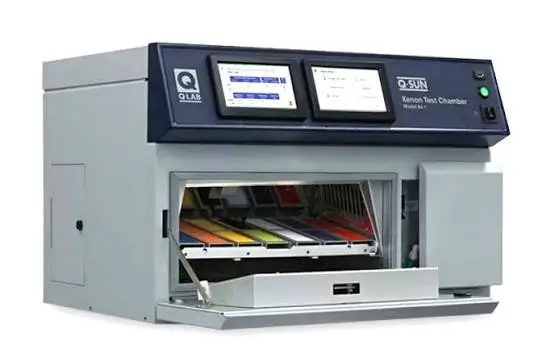
While UV fluorescent chambers offer a cost-effective testing option, they don’t replicate the full solar spectrum as accurately as xenon arc chambers, making the choice between the two dependent on your specific accuracy needs and budget.
Maintaining Consistent Test Conditions
Regular lamp replacement, based on manufacturer-specified operating hours, is essential for maintaining consistent UV output and reliable, repeatable test results over time.
Frequently Asked Questions
What’s the difference between UVA and UVB lamp testing? UVA lamps offer closer correlation to real-world sunlight exposure, while UVB lamps provide more aggressive, faster degradation for accelerated testing scenarios.
Why is condensation cycling included in UV weathering tests? It simulates the natural moisture exposure materials experience outdoors, which combines with UV exposure to more accurately replicate real-world degradation.
How often do UV lamps need to be replaced? This depends on usage intensity and manufacturer specifications, but regular replacement based on operating hours is necessary to maintain accurate, consistent test conditions.
Final Thoughts
UV weathering test chambers remain a foundational tool for predicting material durability under sun exposure. Understanding lamp types, cycling parameters, and maintenance needs supports more reliable, meaningful test results.