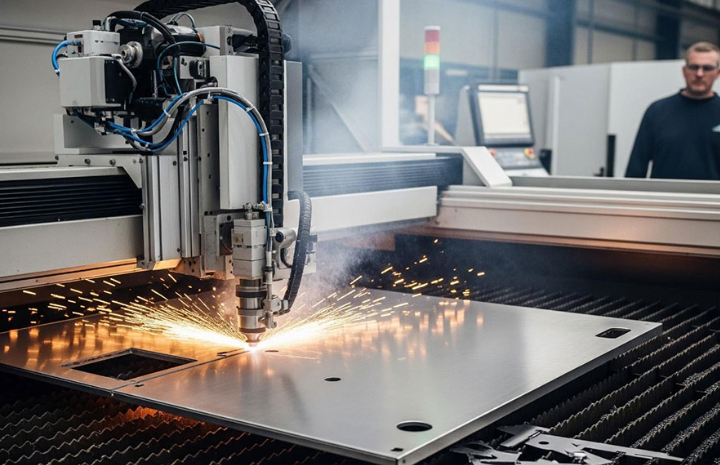
In recent years, the advent of fiber laser machine technology has dramatically transformed the landscape of precision cutting. These machines have become a cornerstone in industries requiring intricate and precise cutting capabilities. Their efficiency and precision have made them indispensable across various fabrication sectors.
Understanding Fiber Laser Machine Technology
Fiber laser machines utilize optical fibers that are doped with rare-earth elements. This design facilitates the generation of a highly focused and precise laser beam. The compact size and powerful output make these machines superior to traditional laser technologies, particularly for detailed cutting tasks.
Key Advantages of Fiber Laser Machines
One of the most significant benefits of fibre laser machines is their ability to deliver exceptional precision and speed. The intensity of the laser beam allows for minimal heat distribution, which reduces the risk of material distortion and ensures a cleaner cut. This precision is unmatched by other traditional cutting methods, making fiber lasers particularly useful for intricate designs and demanding applications.
Energy Efficiency and Cost-effectiveness
Fiber laser machines also offer energy efficiency benefits. These machines require less power compared to conventional laser systems, leading to significant cost savings in the long term. Moreover, the longer lifespan of the fiber lasers means reduced maintenance costs and downtime, enhancing their overall economic viability.
Applications Across Different Industries
Fiber laser machines are versatile and find applications across a wide range of industries. In automotive manufacturing, for instance, they are used for cutting complex patterns and shapes. The electronics industry leverages this technology for creating precise circuit designs, while in the aerospace sector, it is employed for cutting high-strength alloys and other aerospace components.
Medical Device Manufacturing
In the medical sector, fiber laser technology plays a crucial role in the production of medical devices. These machines allow for the production of intricate components with high precision, which is vital for the development of reliable medical devices that meet stringent regulatory standards.
Recent Advancements in Fiber Laser Technology
The ongoing advancements in fiber laser technology continue to push the boundaries of precision cutting. Innovations focus on enhancing beam quality and increasing power output, which permit even more precise cutting tasks. The development of automated systems and machine learning integration further streamline processes, making them more user-friendly and efficient.
Environmental Impact
The adoption of fiber laser technology also aligns with environmental sustainability. The reduced energy requirements mean a lower carbon footprint, while the precision of these machines reduces material wastage, contributing to more sustainable operational practices.
Integration with Modern Manufacturing Processes
Incorporating fiber laser machines into modern manufacturing processes offers strategic advantages. They seamlessly integrate with existing CNC systems and are adaptable to various manufacturing setups, enhancing productivity and reducing production times.
The Future of Fiber Laser Cutting
Looking ahead, the future of fiber laser cutting is promising. With continuous technological improvements and the growing demand for precise and efficient cutting solutions, fiber laser machines are poised to become even more prevalent in manufacturing sectors. Emphasis on automation and smart technology will likely lead to further innovations, enhancing capabilities and applications.
Conclusion
In conclusion, fiber laser machines represent a significant leap forward in the field of precision cutting. Their impeccable precision, efficiency, and adaptability make them a preferred choice across various industries. As technology evolves, these machines are set to play an increasingly prominent role in shaping the future of manufacturing and production processes.