Fabrication vs Manufacturing: Understanding the Core Differences for Smarter Industry Decisions

In the world of industrial production, the terms “fabrication” and “manufacturing” are often used interchangeably — but doing so can lead to costly misunderstandings. Whether you are a business owner sourcing custom components, an engineer specifying production methods, or a procurement professional comparing vendors, knowing exactly how these two processes differ is essential. The distinction shapes everything from cost structures and lead times to the type of workforce and equipment involved. This article breaks down the key differences, explores where each process excels, and explains why clarity on this topic matters more than most people realize.
Defining the Two Processes
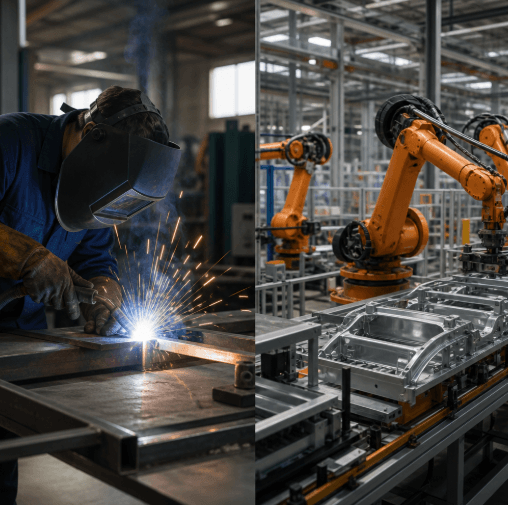
At the most fundamental level, manufacturing refers to the broad process of converting raw materials into finished goods through a series of standardized, repeatable steps. It typically involves large-scale production runs, automated machinery, and highly controlled quality systems. The goal is consistency — producing thousands or even millions of identical units with minimal variation. Think of automotive assembly lines, consumer electronics production, or pharmaceutical packaging. These are environments where efficiency, speed, and uniformity dominate.
Fabrication, on the other hand, is a subset of manufacturing that focuses specifically on building structures or components by cutting, shaping, and assembling raw materials — most commonly metals. Fabrication is inherently more hands-on and custom-oriented. A fabrication shop might produce a single custom steel frame for a specialized machine, a series of uniquely designed brackets, or structural components for a construction project. The emphasis is on craftsmanship, precision, and adaptability rather than volume and speed.
Where the Processes Overlap and Diverge
Scale and Volume
One of the clearest distinctions lies in production scale. Manufacturing thrives on high-volume output. The economics of manufacturing depend on spreading fixed costs — machinery, tooling, facility overhead — across as many units as possible. The more units produced, the lower the per-unit cost. Fabrication, by contrast, is often better suited to low-volume, high-complexity work. A fabricator may produce a single prototype or a small batch of custom parts, and the pricing model reflects the skilled labor and specialized techniques involved rather than economies of scale.
Customization and Flexibility
Fabrication offers a level of customization that standard manufacturing lines simply cannot match. When a client needs a component with unique dimensions, a non-standard material specification, or a design that does not fit any existing mold or die, fabrication is the answer. Manufacturing excels when the design is locked in and the priority is replication. Changing a manufacturing line to accommodate a new design is expensive and time-consuming. A fabrication shop can pivot far more quickly, making it the preferred choice for industries like aerospace, defense, and custom construction where one-off or limited-run components are common.
Processes and Techniques
Manufacturing processes include injection molding, die casting, stamping, extrusion, and continuous flow production. These methods rely on pre-made molds and tooling to produce consistent shapes at speed. Fabrication processes include welding, cutting (plasma, laser, waterjet), bending, rolling, and machining. These techniques require skilled tradespeople who can interpret technical drawings and make real-time adjustments. The difference in technique reflects the difference in purpose: manufacturing is about replication, fabrication is about construction.
Why This Distinction Matters for Business Decision-Making
Understanding which process fits your project is not just an academic exercise — it has direct financial and operational consequences. Choosing a manufacturing approach for a low-volume custom project means paying for tooling and setup costs that will never be amortized. Choosing a fabrication approach for a high-volume standardized product means sacrificing the cost efficiencies that would make the business viable. Getting this decision right from the outset can save significant time and money.
Understanding the fabrication manufacturing differences is critical for any business that relies on custom components, structural assemblies, or precision metalwork. Companies that conflate the two often find themselves locked into contracts or vendor relationships that do not align with their actual production needs, leading to delays, cost overruns, and quality issues that could have been avoided with better upfront clarity.
Industry Applications: Knowing Which to Choose
When to Choose Fabrication
Fabrication is the right choice when your project demands custom dimensions, structural integrity, and skilled assembly. Industries that regularly rely on fabrication include oil and gas (custom piping and pressure vessels), construction (structural steel and architectural metalwork), agriculture (custom equipment frames and attachments), and transportation (specialized vehicle bodies and trailers). If your component needs to be built rather than molded, fabrication is the path forward.
When to Choose Manufacturing
Manufacturing is the right choice when you need consistent, high-volume output of a standardized design. Consumer goods, electronic components, packaged foods, and automotive parts are all examples where manufacturing’s efficiency and repeatability provide clear advantages. Once the design is finalized and tooling is in place, manufacturing can produce at a pace and cost that fabrication simply cannot match at scale.
The Role of Digital Strategy in Industrial Businesses
As fabrication and manufacturing companies grow more competitive, many are turning to digital marketing to differentiate themselves and attract the right clients. Understanding how businesses track results from online marketing is increasingly relevant for industrial firms that want to measure the return on their digital investments. From tracking lead sources to analyzing which content drives inquiries, data-driven marketing is becoming as important in the industrial sector as it is in professional services.
The Importance of Education and Substance in Industrial Design
There is a broader conversation happening in the design and engineering world about the gap between theoretical knowledge and practical application. A thoughtful examination of design education and the challenge of brilliance without substance highlights a tension that is equally relevant in fabrication and manufacturing contexts: technical knowledge must be grounded in real-world application to be truly valuable. Engineers and designers who understand both the theory and the shop floor realities of fabrication versus manufacturing are far better equipped to make sound decisions.
About Craftsmen Industries
Craftsmen Industries is a recognized leader in custom fabrication and specialty vehicle manufacturing, with decades of experience delivering precision-built solutions across a wide range of industries. Their team combines deep technical expertise with a commitment to quality craftsmanship, making them a trusted partner for clients who need more than off-the-shelf solutions. From mobile marketing units and experiential trailers to industrial fabrication projects, Craftsmen Industries brings the kind of hands-on skill and engineering rigor that complex, custom work demands. Their blog and educational resources reflect a genuine commitment to helping clients make informed decisions about their production needs.
See also: Why Businesses Schedule Regular Electrical Testing for Electrical Failures
Conclusion
The difference between fabrication and manufacturing is not merely semantic — it reflects fundamentally different approaches to production, each with its own strengths, limitations, and ideal use cases. Fabrication offers customization, flexibility, and structural precision for complex, low-volume work. Manufacturing delivers efficiency, consistency, and cost-effectiveness at scale. Understanding which approach fits your project is one of the most important decisions you can make before committing resources. By taking the time to learn these distinctions, businesses can align their production strategies with their actual needs, avoid expensive mistakes, and build stronger relationships with the right vendors and partners.