Modern industrial projects are often judged by what happens on site: cranes, crews, installation schedules, and final commissioning. But many of the biggest risks are decided much earlier, before anything reaches the plant. If a project team can solve layout, welding, testing, controls, and transport questions in a workshop, the site becomes calmer and easier to manage.
This is why more chemical, energy, and advanced-materials companies are using modular process skids. A skid is not just equipment placed on a frame. It is a compact process unit where piping, vessels, valves, instruments, control panels, and access space are planned together. Instead of sending every small task to the jobsite, the team builds and checks more of the system in a controlled factory environment.
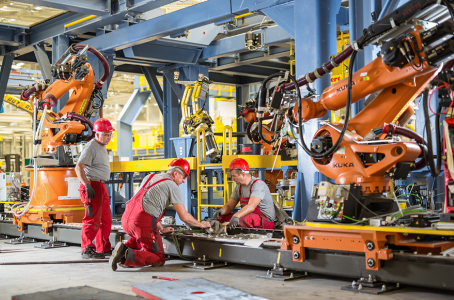
The value is easy to understand. Site work is expensive, crowded, and sensitive to weather, access, and other contractors. Workshop work is more predictable. Welds can be inspected more carefully. Instruments can be installed in the right positions. Operators and maintenance teams can review whether they can actually reach the parts they need. For projects with tight delivery windows, that can make a real difference.
Sharp Eagle’s case pages show this in practical ways. A polysilicon feed skid project needed many furnace systems delivered quickly while keeping the process clean. A dilute ethylene recovery skid needed engineering, piping, electrical, instrumentation, and control details to work as one unit. A supercritical carbon dioxide heat exchange skid had to fit high-pressure equipment into a limited envelope. These are not simple “bolt things together” jobs. They are coordination problems.
Pressure equipment is another part of the same story. Good pressure vessels design is not only about wall thickness or material selection. It also affects piping routes, nozzle orientation, inspection access, safety devices, testing records, and later maintenance. When vessel design and skid layout are considered together, fewer problems are pushed to the installation team.
For business leaders, the lesson is straightforward: industrial project speed does not come from rushing the final installation. It comes from removing uncertainty before the equipment leaves the factory. A supplier such as sharp eagle can help by turning a process idea, site limit, or pilot requirement into equipment that is easier to fabricate, test, transport, connect, and operate.
In a market where clean energy, chemical processing, and advanced materials projects all need faster delivery, this practical approach matters. The workshop is no longer just a place for manufacturing. It is where many project risks are solved before they reach the field.