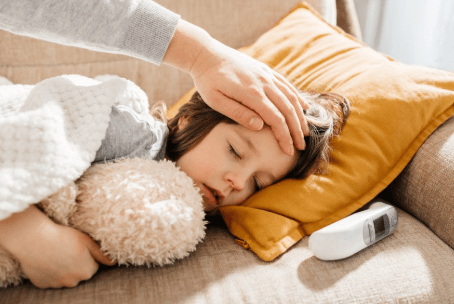
Fever is a widespread symptom of childhood which does not demand any serious problems. However, children fever may occasionally indicate or result in potentially life threatening complications requiring immediate treatment. The guide assists parents and caregivers to recognize the signs of danger that need urgent medical attention.
Signs indicating fever related issues in children
Febrile seizures and their signs
Febrile seizures are the irregularities in young children in which the body temperature increases quickly; mostly between the ages of six months and five years. These seizures take less than five minutes and are normally accompanied by shaking, rolling eyes or unconsciousness. These are the important symptoms of febrile seizures:
- Body stiffening and jerking: The child could shake and jerk his body as well as his arms and legs, his eyes roll backward as the episode of the seizure occurs.
- Unresponsiveness: The child happens not to respond to voice or touch and can apparently be in a state of unconsciousness in the process of seizing.
- Changes in breathing: Breathing may start to be irregular, shallow or even stop during the seizure episode.
- Color change of the skin: There may be color change of the skin during the convulsion, face turns pale or lips or nail beds become bluish.
- Post seizure confusion: After the seizure of the child, a child might be observed to be sleepy, disoriented, or angry, up to one hour.
Dehydration warning signs
The high fever causes loss of fluids due to sweating and breathing rapidly thus causing dehydration. The dehydration of young children is much faster than that of adults and should be closely observed. The child fever symptoms, which prove the dehydration, are as follows:
- Reduced urine output: The child passes over six or eight hours without either wetting a diaper or using a toilet.
- Dry mouth and lips: The lips and the inside of the mouth are sticky or dry and crack even though they contain fluid.
- Excessive drowsiness: The child is hard to wake, and appears to be more sleepy than his or her age.
- No tears when crying: The child cries without tears which means that there is a lot of fluid loss.
- Sunken soft spot: The top of the baby head has a sunken or depressed soft spot.
See also: Precision Health & Genomics Platform: Transforming the Future of Personalized Healthcare
Lethargy and altered mental state
A child, who changes his/her behavior and becomes hard to wake, even with fever, needs urgent medical examination. It can be brought about by severe infections like meningitis or sepsis. These are the changes in mental status that are warning signs of danger:
- Difficulty waking: The child is hard to get awake and it seems that the child is lost or confused on waking.
- Irritability: The infant does not want to be held and comforted by the parent and other caregivers, this infant cries all the time.
- Limpness: When picked up, the child is floppy, and does not have normal muscle tone.
- High-pitched cry: An abnormal unique cry that is more of a scream than crying.
- Not interacting: The child fails to engage in eye contact with people or even in response to the familiar faces and voices.
Summarizing
Understanding complications associated with fever in children involves being aware of the symptoms of fever in children indicating severe issues. Febrile seizures, dehydration and lethargy are medical conditions, which require medical attention. Immediate response to danger signs can help parents avoid severe consequences and help them rescue their children and provide the necessary treatment.